



J.M.W. Turner, Self Portrait c. 1799. Image courtesy of Tate.
Tate Britain presents the first major exhibition to explore the intertwined lives and legacies of Britain’s most revered landscape artists: JMW Turner (1775–1851) and John Constable (1776–1837). Radically different painters and personalities, each challenged artistic conventions of the time, developing ways of picturing the world which still resonate today. Marking the 250th anniversary years of their births, this exhibition traces the development of their careers in parallel, revealing the ways they were celebrated, criticised and pitted against each other, and how this pushed them to new and original artistic visions. It features over 190 paintings and works on paper, from Turner’s momentous 1835 The Burning of the Houses of Lords and Commons, lent by Cleveland Museum of Art and not seen in Britain for over 60 years, to The White Horse 1819, one of Constable’s greatest artistic achievements, last exhibited in London two decades ago.
Born only a year apart - Turner in London’s crowded metropolis and Constable to a prosperous family in the Suffolk village of East Bergholt - their contrasting early lives will begin the exhibition. Turner was a commercially minded, fast-rising young star who first exhibited at the Royal Academy in 1790 aged just 15 and created ambitious oil paintings like recently-discovered The Rising Squall, Hot Wells, from St. Vincent’s Rock, Bristol, before he turned 18. By contrast, largely self-taught Constable undertook sketching tours to create early watercolours like Bow Fell, Cumberland 1807 and demonstrated a fierce commitment to perfecting artistic techniques, not exhibiting at the Royal Academy until 1802. Having both emerged amid an explosion in popularity of landscape art, the two were united however, in their desire to change it for the better.

John Constable by Ramsay Richard Reinagle c. 1799. NPG 1786. © National Portrait Gallery, London.
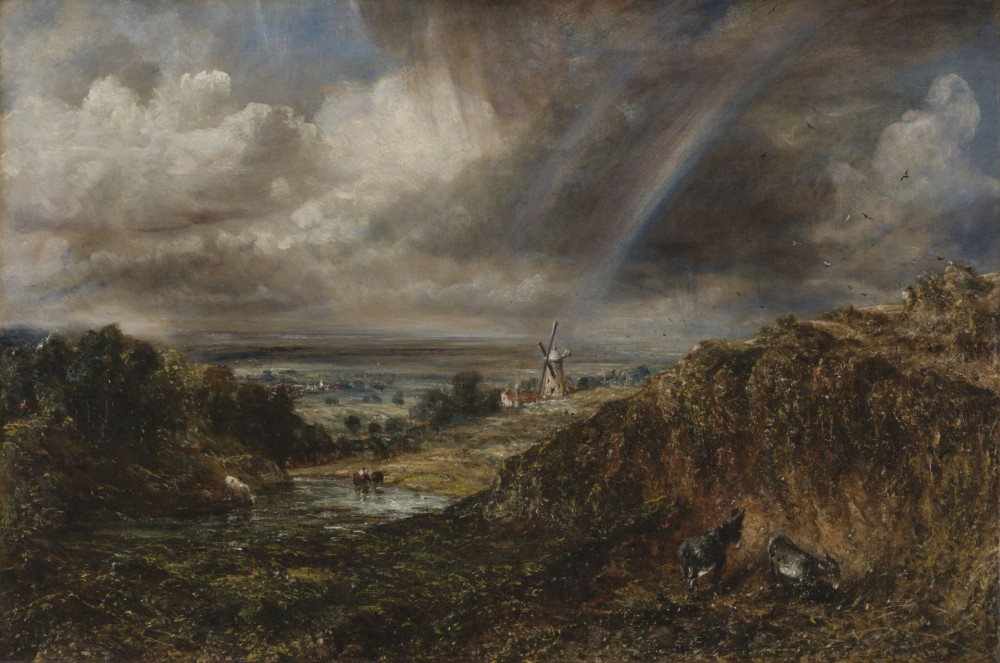
The exhibition explores how both artists developed distinct artistic identities within the competitive world of landscape art, spotlighting their methods, evolution and overlap. Constable built his reputation on the Suffolk landscapes of his childhood, opting to sketch in oils outside amid the vast views of Dedham Vale and the river Stour, which often recurred in his work. His painting box and sketching chair are displayed, with visitors able to chart the development of Constable’s skilful draughtsmanship and radical handling of paint to add ‘sparkle’. A group of Constable’s cloud studies have been brought together for the exhibition. Reflective of his belief that the sky was key to the emotional impact of a painting they are now one of the most celebrated aspects of his output and underpinned the powerful skyscapes in the artist’s monumental six-foot canvases. Late works such as Hampstead Heath with a Rainbow 1836 illustrate his deft interweaving of personal and historic memories.
By contrast, Turner travelled widely across Britain and Europe filling sketchbooks with quick pencil studies. This offered creative inspiration, influencing sublime Alpine scenes such as The Passage of Mount St Gothard from the Centre of Teufels Broch (Devil’s Bridge) 1804, as well as commercial opportunities to have prints made after his watercolours. The exhibition explores how Turner developed original ways to apply paint and depict light, capturing the raw power of nature. Some of Turner’s most celebrated late works are featured, including Ancient Italy – Ovid Banished from Rome, first exhibited in 1838 and not shown in London in over 50 years.
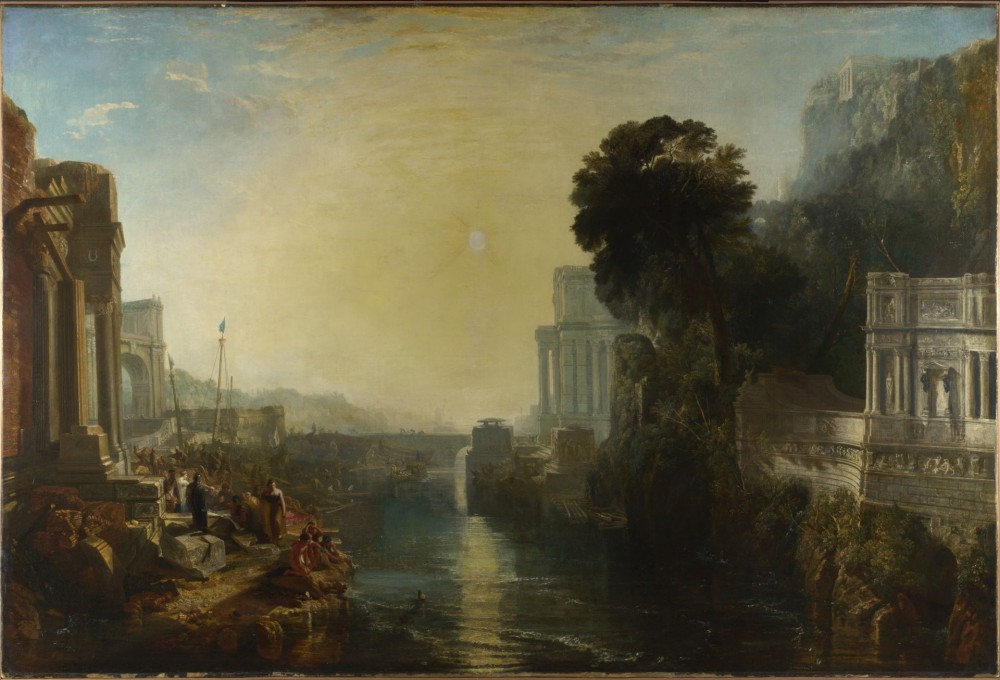
JMW Turner, Dido building Carthage, or The Rise of the Carthaginian Empire, 1815. ©The National Gallery, London. All rights reserved.
By the 1830s, both Turner and Constable became recognised for taking landscape painting in bold new directions. The stark differences between their work spurred art critics to pit them against one another and to cast them as rivals. In 1831 Constable himself played into this, placing his and Turner’s work side by side at the Royal Academy exhibition. This showing of Turner’s Caligula’s Palace and Bridge next to Constable’s Salisbury Cathedral from the Meadows, prompted a flurry of comparisons between the sun-drenched heat of Turner’s mythical Italian scene and Constable’s damply atmospheric Britain; they were ‘fire and water’. Now placed head-to-head at Tate Britain, the artists’ most distinctive and impressive paintings highlight how, despite their differences, they made landscape a genre worthy of grand canvases and prime importance.
Creators of some of the most daring and captivating works in the history of British art, Turner and Constable changed the face of landscape painting with their two competing visions, elevating the genre with their recognition of its endless potential to inspire. The exhibition ends with a new film featuring contemporary artists Frank Bowling, Bridget Riley, George Shaw and Emma Stibbon reflecting on the enduring legacy of Turner and Constable.

John Constable. The Wheatfield. 1816. Image courtesy Clark Art Institute.
Turner and Constable: Rivals and Originals is in partnership with LVMH. Supported by the Huo Family Foundation and James Bartos. With additional support from The Turner and Constable Exhibition Supporters Circle, Tate Americas Foundation and Tate Members. Research is supported by the Manton Historic British Art Scholarship Fund. The exhibition is curated by Amy Concannon, Manton Senior Curator, Historic British Art, with Nicole Cochrane, Assistant Curator, Historic British Art (1790–1850) and Bethany Husband, Exhibitions Assistant.
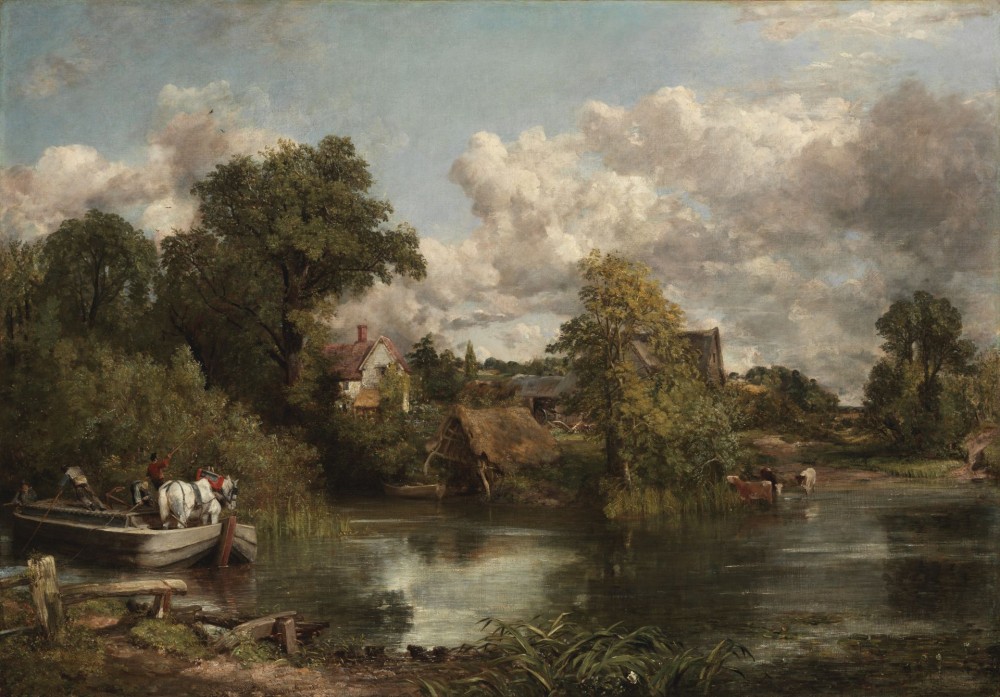
John Constable, The White Horse, 1819. © The Frick Collection, New York. Photo: Joseph Coscia Jr
Related materials
Turner and Constable: Rivals and Originals
Published November 2025
Edited by Amy Concannon
256 pages
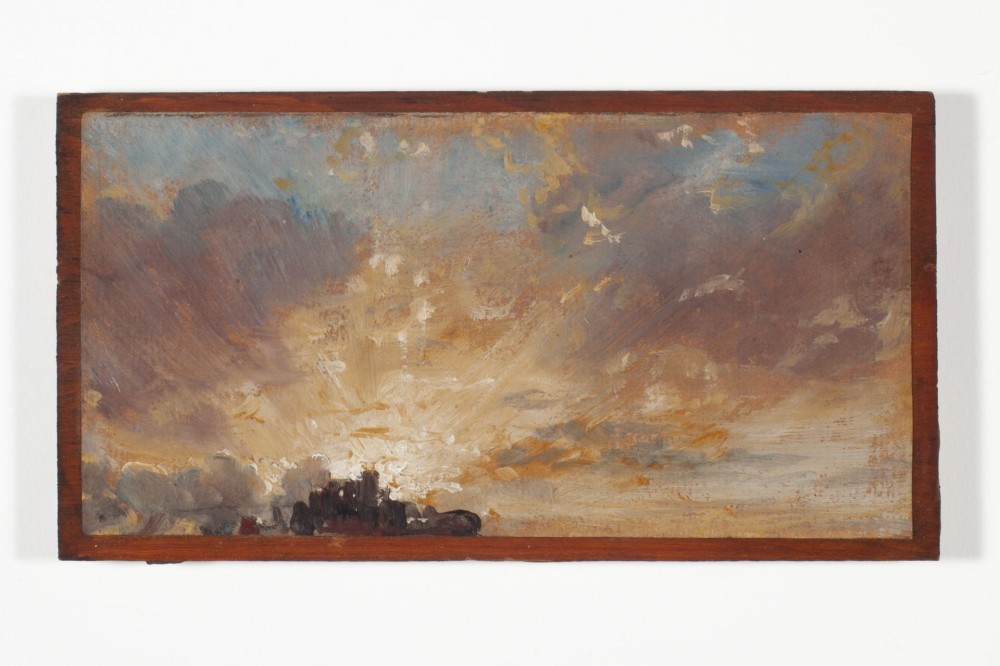
John Constable. A Vivid Sunset. 1820. Private Collection.
Related events and content
Turner 250 conference
4-5 December 2025
Bringing the celebrations of Turner’s 250th year to a close, this conference held at Tate Britain will explore Turner’s legacy, taking his art and life as a starting point for exploring what it means to research Turner and to curate his work today.
Organised by Tate Britain in collaboration with the Paul Mellon Centre for Studies in British Art and supported by The Manton Foundation Fund for Historic British Art.
Slow Looking: Turner & Constable
Thursday 29 January 2026
11.00 – 12.00
Tate Britain, Clore Auditorium
In support of Turner and Constable at Tate Britain, this Slow Looking session will focus on Salisbury Cathedral from the Meadows (John Constable, 1831), with insights from Constable scholar and lead exhibition curator Amy Concannon.
Land, Material, Memory
Saturday 28 February
19.00 – 22.00
Tate Britain, Duveens
Explore deeply felt responses to the British landscape through an evening of performance and embodied practice. Live Art Development Agency, Ash McNaughton & n:u reflect on the social, political and ecological memory of these islands, examining how memory is held and transformed by the body.
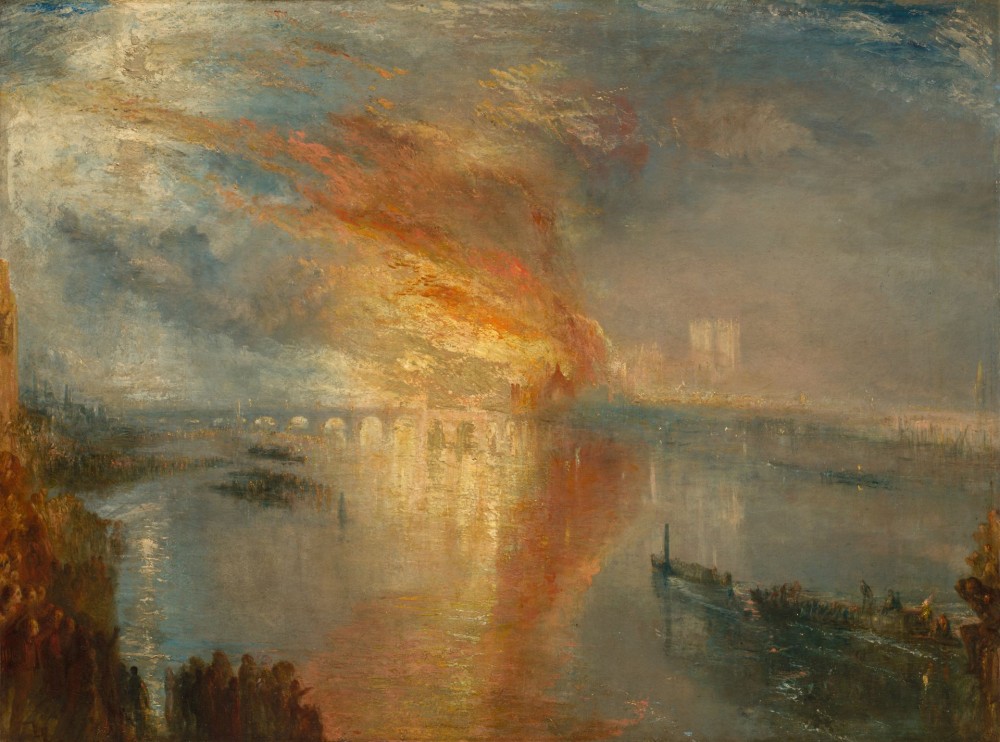
JMW Turner, The Burning of the Houses of Lords and Commons, 16 October 1834, 1835. Cleveland Museum of Art. Bequest of John L. Severance 1942.647
Audio guide
The exhibition is accompanied by a self-led smartphone audio tour featuring contributions from lead curator, Dr. Amy Concannon, assistant curator Dr. Nicola Cochrane, Senior Cataloguer Matthew Imms, Conservation Scientist Dr. Joyce Townsend, Conservation Manager Jacqueline Moon, Assistant Conservator Arantza Dobbels Busto, and Gavin Pretor-Pinney, Founder of the Cloud Appreciation Society.

JMW Turner, Keelmen Heaving in Coals by Moonlight, 1835. National Gallery of Art, Washington, Widener Collection.
Turner: The Secret Sketchbooks
Available on BBC iPlayer
A look at the hidden psychology of renowned painter JMW Turner through his 37,000 private sketches, drawings, and watercolours – an extraordinary archive that reveals the man behind the masterpieces. Featuring interviews with actor Timothy Spall, who famously portrayed the artist in Mike Leigh’s Mr Turner, artist Tracey Emin, artist and filmmaker Sir John Akomfrah, Rolling Stone’s Ronnie Wood, psychotherapist Orna Guralnik, naturalist Chris Packham, and an array of leading art historians including Tate Britain Senior Curator for Historic British Art Amy Concannon.
Exhibition on Screen: Turner & Constable
Directed by David Bickerstaff; 91 minutes; in cinemas from 10 March 2026
Two of Britain’s greatest painters, J.M.W. Turner and John Constable were also the greatest of rivals. Born within a year of each other, both used landscape painting to reflect the changing world around them. Constable represents the very best of pastoral nostalgia; Turner, an exciting new way of depicting emotion through landscape. Critics of the time compared their starkly different styles to a clash of ‘fire and water’. Now, these two greats are reuniting. Exhibition on Screen has exclusive and privileged access to bring the groundbreaking Tate Britain exhibition and the remarkable stories behind the art to UK cinemas from 10 March, allowing audiences to enjoy film and exhibition together. Don’t miss this opportunity to see these astonishing artists side-by-side, as they so often were in life, on the big screen for the first time.
Further information and screening locations available at: https://seventh-art.com/product/turner_constable/
John Constable, Cloud Study (with birds), 1821. Image Courtesy Yale Center for British Art, Paul Mellon Collection.
About LVMH Corporate Philanthropy
The 75 Maisons of the LVMH Group represent a unique heritage, often centuries old, deeply rooted in French and Western culture. LVMH Maisons are resolutely future-facing and continually reinvent themselves, drawing on their rich legacy or heritage and savoir-faire. Intimately engaged with French culture, arts and creative talents, LVMH has for over 30 years been an active partner to the world of culture, with an emphasis on access for the widest possible audience. The Group pursues corporate philanthropy initiatives in support of artistic, intellectual and scientific endeavours in France and around the world.
Jean-Paul Claverie, Advisor to Bernard Arnault, Chairman and Chief Executive of LVMH, commented: ‘Tate has long played a vital role in supporting artists and inspiring creativity around the world. LVMH is proud to continue our enduring relationship with Tate by partnering on the landmark Turner and Constable exhibition at Tate Britain. We are honoured to support this major exhibition and contribute to the worldwide celebrations of the 250th birthday of JMW Turner in 2025 and John Constable in 2026 - marking the legacy of two of Britain’s most influential artists.’