| Brazil |
São Paulo |
Centro Cultural Banco do Brasil |
156. |
267 |
|
|
Art
|
More |
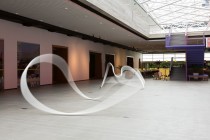
Centro Cultural Banco do Brasil, São Paulo opened in 2001. It covers an area of 4 183 square meters.
Centro Cultural Banco do Brasil, São Paulo does not have its own collection. The CCBB program, São Paulo is prepared annually and begins with the process of registering projects via the Internet. Anyone can submit their project, Project registration is done by filling out a comprehensive electronic form. The registration period is usually from April to May. After the registration phase, the projects are examined by CCBB analysts who receive guidance from management on the marketing strategies for the current year.
|
| Brazil |
São Paulo |
Instituto Tomie Ohtake |
218. |
583 |
|
|
Art
|
More |
Instituto Tomie Ohtake was opened in 2001.
Instituto Tomie Ohtake organizes national and international exhibitions of fine arts, architecture and design. His interests include the art of the 20th and 21st centuries.
It does not have its own collection.
Its area is 7,500 square meters, most of this area is occupied by 7 exhibition rooms.
Credits by Ricardo Miyada
|
| Brazil |
São Paulo - SP |
Museu de Arte Sacra de São Paulo |
365. |
370 |
|
|
Art, sacred art
|
More |
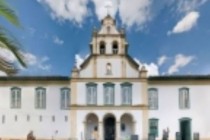
Museu de Arte Sacra de São Paulo (MAS-SP) is a public institution affiliated with the Government of the State of São Paulo, under the responsibility of the Secretariat of Culture, Economy, and Creative Industries. It was inaugurated in 1970.
Located in the city of São Paulo, the Museum occupies the Mosteiro da Luz, a convent belonging to the Order of the Conceptionist Sisters (Order of the Immaculate Conception - OIC), whose nuns live in seclusion.
The Mosteiro da Luz was founded in 1774 by Frei Galvão (Frei Antônio de Sant’Anna Galvão, 1739–1822), the first Brazilian saint, whose remains are interred beneath the Monastery.
Today, the Monastery stands as the only colonial building from the 18th century in São Paulo that has preserved its original materials, elements, and structure. It is an example of taipa (rammed earth) architecture.
The MAS-SP houses one of the most important collections of sacred art in Brazil, assembled by the Archdiocesan Mitre throughout the 20th century. The collection includes pieces from historic churches across the country, sculptures of saints produced in Brazil and Europe between the 16th and 20th centuries, as well as silverware and paintings.
Its holdings comprise religious sculptures from the colonial period and several masterpieces by prominent artists such as Aleijadinho, Frei Agostinho da Piedade, Frei Agostinho de Jesus, Mestre Valentim, Mestre Ataíde, Almeida Júnior, and Benedito Calixto.
|
| Bulgaria |
Sofia |
National Historical Museum |
376. |
352 |
|
|
National - history,... archeology, art, ethnography
|
More |
The National Historical Museum (Национален исторически музей) in Sofia, Bulgaria is the country’s largest and one of the richest history museums in the Balkans. It was established on 5 May 1973 and since 2003 has been housed in a former government residence at the foot of Vitosha Mountain in the Boyana district.
The museum’s vast collection comprises over 650,000 historical, archeological, ethnographic and artistic objects spanning from prehistory to the present day, though only about 10 % are on permanent display.
Highlights include iconic artifacts such as the Panagyurishte Golden Treasure and other Thracian treasures, as well as extensive exhibits on medieval Bulgaria, the Ottoman period, national revival, and the modern Bulgarian state.
|
| Bulgaria |
Sofia |
National Museum of Natural History |
394. |
190 |
|
|
National – natural... history, biodiversity, paleontology, mineralogy
|
More |
The National Museum of Natural History – Sofia is the oldest and richest natural history museum on the Balkan Peninsula, affiliated with the Bulgarian Academy of Sciences. Founded in 1889, the museum studies, preserves and exhibits extensive collections of animals, plants, fossils, minerals, and other natural specimens, with nearly 1.5 million items. Its mission includes research, education, and the dissemination of knowledge about biodiversity, ecology, and the natural world both in Bulgaria and internationally.
|