| 150. |
264 |
Museum of Fine Arts |
USA |
Houston |
|
|
Art
|
More |
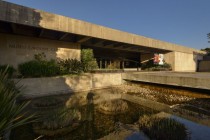
Museum of Fine Arts founded in 1900.
It has over 70,000 exhibits in its collection from antiquity to the present day. The collection consists of art: European (e.g. Sandro Botticelli, Francisco Goya, Peter Paul Rubens, Claude Monet, Pierre-Auguste Renoir, Édouard Manet, Paul Cézanne, Vincent van Gogh), American (e.g. Charles Willson Peale, Albert Bierstadt, Mary Cassatt , Georgia O'Keeffe, Alexander Calder, Jackson Pollock, Robert Rauschenberg, Andy Warhol), Latin America (e.g. David Alfaro Siqueiros), Africa, Asia (e.g. Utamaro Kitagawa), Australia and Oceania, Islam, photography (e.g. Man Ray, Alfred Stieglitz).
|
| 151. |
188 |
National Science and Technology Museum |
Chinese Taipei |
Kaohsiung |
|
|
Science and technology
|
More |
The National Science and Technology Museum (NSTM) opened to the public in 1997.
NSTM covers an area of 19 hectares, the area of one floor is 112,400 square meters. It presents 18 permanent exhibitions in separate halls. Permanent exhibitions are devoted to: industrial history, air navigation and aerospace, biological technology, clothing and textiles, healthy living, food industry, energy conservation, machines, utilization of water resources, transportation, the diseases prevention.
|
| 152. |
2040 |
Museu Picasso |
Spain |
Barcelona |
|
|
Art
|
More |
The Museu Picasso opened in 1963.
The museum has over 4,000 works by the painter Pablo Picasso (1881-1973). The permanent exhibition features the artist's painting, drawing, engraving, and ceramics.
The Museu Picasso was the first museum in the world dedicated to the work of Pablo Picasso and the only one created during his lifetime.
The total area of the museum is over 12,000 square meters.
|
| 153. |
279 |
Zona Arqueológica de Tulum |
Mexico |
Tulum |
|
|
Archaeological park
|
More |
Tulum is a former Mayan city that was surrounded by a wall.
Its history dates back to at least the 6th century AD. Its peak development falls between the 13th and 15th centuries. After the occupation by the Spaniards in the 16th century, the city was deserted.
Main historic buildings: Temple of the Frescoes, Temple of the Descending God, El Castillo.
|
| 154. |
248 |
Berlin Wall Memorial |
Germany |
Berlin |
|
|
Memorial
|
More |
The Berlin Wall Memorial created in 1998 commemorates the division of Berlin by Walls and the victims of the Berlin Wall. It stretches along 1.4 kilometers of the former border strip between Berlin (the capital of the DDR) and West Berlin. Fall of the Berlin Wall in 1989. The Wall Memorial includes: the outdoor memorial site with the last piece of the Berlin Wall, Documentation center, Chapel of Reconciliation, memorial window and Visitor Service Center,
|
| 155. |
2999 |
National Museum of Singapore |
Singapore |
Singapore |
|
|
History
|
More |
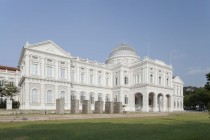
The National Museum of Singapore opened in 1887.
The collections consist of artifacts related to the history of Singapore, such as the approximately 1,000-year-old Singapore Stone with inscriptions in Old Hawaiian or Sanskrit, and 14th century gold ornaments discovered at nearby Fort Canning Hill in 1928.
|
| 156. |
216 |
Centro Cultural Banco do Brasil |
Brazil |
São Paulo |
|
|
Art
|
More |
Centro Cultural Banco do Brasil, São Paulo opened in 2001. It covers an area of 4 183 square meters.
Centro Cultural Banco do Brasil, São Paulo does not have its own collection. The CCBB program, São Paulo is prepared annually and begins with the process of registering projects via the Internet. Anyone can submit their project, Project registration is done by filling out a comprehensive electronic form. The registration period is usually from April to May. After the registration phase, the projects are examined by CCBB analysts who receive guidance from management on the marketing strategies for the current year.
|
| 157. |
338 |
Wawel Royal Castle-State Art Collection |
Poland |
Krakow |
|
|
Historic house, art
|
More |
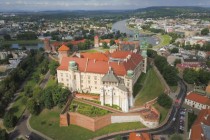
Wawel Royal Castle-State Art Collection gives the date of its foundation 1930.
Wawel Royal Castle was built from the 10th century, the present castle was built in the 14th century and then extended over the next hundreds of years. From the end of the 11th century to 1606, it was the residence of the kings of Poland. It consists of a series of buildings from the Romanesque, Gothic, Renaissance and Baroque periods arranged around the main, arcaded courtyard in the style of the Italian Renaissance.
At the permanent exhibitions Wawel Royal Castle you can see: the coronation sword Szczerbiec, a collection of 138 tapestries made in Brussels from around 1550 to 1560, the largest collection of Ottoman tents in Europe.
Wawel Royal Castle covers 7,040 square meters. There are 71 exhibition halls to visit.
The museum's branches are: Pieskowa Skała Castle and Manor House at Stryszów.
On the Wawel Hill, next to the castle, there is a cathedral, the construction of which began in the 14th century, on the foundations of two earlier cathedrals. Polish monarchs were crowned in the Wawel Cathedral. In the crypts under the Wawel Cathedral, there are the tombs of Polish kings, national heroes and national bards. The cathedral is surrounded by numerous chapels, one of them Sigismund's Chapel, conceived as the mausoleum of the last members of the Jagiellonian dynasty, is considered an outstanding example of the Tuscan Renaissance. The Cathedral Museum named after John Paul II, opened in 1978, operates at the cathedral.
|
| 158. |
649 |
National Museum of Egyptian Civilization |
Egypt |
Cairo |
|
|
History
|
More |
The National Museum of Egyptian Civilization (NMEC) officially opens to the public in 2021. One of the most important moments related to the opening of the museum was the ceremonial procession known as the "Golden Parade of the Pharaohs", in which 22 royal mummies were transferred to NMEC from the Egyptian Museum in the center of Cairo, including 18 kings (e.g. Ramesses II) and 4 queens (e.g. Hatshepsut).
NMEC has a collection of exhibits that cover the entire history of Egyptian civilization - from prehistoric times to the present day. The museum's collections are divided into different historical and thematic periods (e.g. the Gallery of Royal Mummies), giving a comprehensive picture of Egypt's cultural development. The main collection categories include:
1. Prehistoric period - exhibits from before the invention of writing, including tools, ceramics, decorations and everyday objects.
2. Pharaonic period - a rich collection from the times of ancient Egypt, including, among others, statues, jewelry, sarcophagi, tomb and temple paintings, and artifacts related to religious rituals.
3. Greco-Roman period - exhibits from the period when Egypt was under the rule of the Greeks and Romans, including sculptures, coins, ceramics and other objects of Hellenistic and Roman culture.
4. Coptic period - objects from early Christian times, including icons, textiles, manuscripts and liturgical objects.
5. Islamic period - a collection showing the development of Islamic culture in Egypt, including ceramics, weapons, coins, textiles and calligraphy.
6. Contemporary period - exhibits on the recent history of Egypt up to the present day, showing the social, cultural and political development of the country.
NMEC has a collection of approximately 50,000 items. Currently, approximately 5,000 exhibits are presented in museum exhibitions.
NMEC's exhibition area is over 23,000 square meters.
|
| 159. |
215 |
National Museum of Modern and Contemporary Art |
South Korea |
Gwacheon |
|
|
Art
|
More |
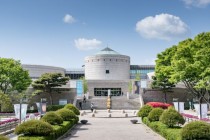
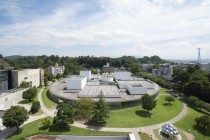
National Museum of Modern and Contemporary Art established in 1969.
It has 4 locations in Gwacheon, Seoul, Deoksugung, Cheongju.
MMCA presents modern Korean and contemporary art from around the world. You can see works there, among others, Nam June Paik and Andy Warhol.
Around 7,000 works of art are stored at the headquarters in Gwacheon.
MMCA Gwacheon © Park Jung Hoon
|
| 160. |
2458 |
Vasa Museum |
Sweden |
Stockholm |
|
|
Maritime
|
More |
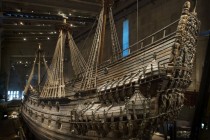
The Vasa Museum houses Vasa, the world's best-preserved ship from the 1600s with over 98 percent of its original parts preserved, and ornamented with hundreds of carved sculptures. The 69-meter-long warship sank on its maiden voyage in Stockholm in 1628. After a laborious salvage effort in 1961, Vasa broke the water's surface again after 333 years on the seabed. For more than half a century the ship has been slowly, carefully and painstakingly restored to a state approaching its original glory. Since 1990 Vasa is on display in the purpose-built museum.
There are eleven different exhibitions around the ship which tell about the life on board Vasa, the symbolism of its sculptures, the country of Sweden in the 1620s, the people who followed Vasa down into the deep, the salvaging in the 1960s and the efforts to preserve the ship for the future, and outside is the museum's 17th century garden.
The warship Vasa in the Vasa Museum. Photo: Anneli Karlsson, the Vasa Museum/SMTM.
|
| 161. |
379 |
Children's Museum of Indianapolis |
USA |
Indianapolis |
|
|
Children's
|
More |
The Children's Museum of Indianapolis, founded in 1925, is the world's largest children's museum.
The museum's collections are divided into:
- Natural Science Collection - fossils, bones of Ice Age animals and animals living today
- World Cultures Collection - items from all continents, many eras and a great variety of cultures
- Arts and Humanities Collections - American culture from the 18th century to the present day
- National Art Museum of Sport - famous athletes and moments in the history of sport presented in the works of artists
More than 130,000 number of artifacts and specimens.
The museum covers an area of 43,934 square meters.
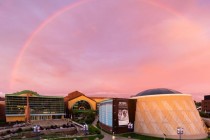
Photo: The Children's Museum of Indianapolis
|
| 162. |
282 |
National Museum of Natural History |
France |
Paris |
|
|
Natural history
|
More |
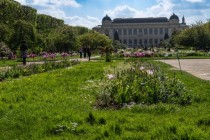
The National Museum of Natural History (MNHN) was founded in 1635 as a royal garden of medicinal plants, formally founded in 1793. It has 68 million specimens in its collection.
MNHN is divided into:
Garden of plants
- Gallery of Evolution
- Cabinet of Virtual reality
- Paleontology and comparative Anatomy Gallery
- Mineralogy and Geology Gallery
- Botanical Gallery
- Grandes Serres du Jardin des Plantes
- Ménagerie, the zoo of the Jardin des Plantes
- Amphithéâtre Verniquet
- Grande Galerie de l’Évolution Auditorium
- Children’s Gallery
Museum of mankind
Zoological park of Paris
Versailles Chèvreloup Arboretum
Haute-Touche animal reserve
Jean-Henri Fabre museum
Botanical garden Val Rahmeh-Menton
Pataud shelter
Concarneau Marine Biology Station and Marinarium
La Jaÿsinia alpin garden
Paléosite de Sansan
Musém national d'Histoire naturelle © F-G Grandin MNHN
|
| 163. |
399 |
Sacré-Cœur |
France |
Paris |
|
|
Temple
|
More |
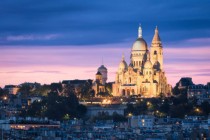
Sacré-Cœur (Basilica of the Sacred Heart of Montmartre) Roman Catholic church and minor basilica.
Sacré-Cœur was built between 1875 and 1914 from travertine limestone.
The style of the building refers to Roman-Byzantine architecture with Neo-classical elements.
The mosaic above the choir, titled The Triumph of the Sacred Heart of Jesus, is one of the largest mosaics in the world.
Length 85 metres, width 35 metres, height 83 metres.
|
| 164. |
167 |
Lincoln Memorial |
USA |
Washington |
|
|
Mausoleum
|
More |
Lincoln Memorial opened in 1922. Commemorates the 16th President of the United States Abraham Lincoln.
Area 539.6 square meters. Managed by the National Park Service.
|
| 165. |
356 |
Museo Nacional de Bellas Artes |
Argentina |
Buenos Aires |
|
|
Art
|
More |
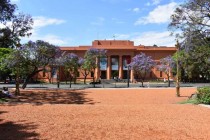
The Museo Nacional de Bellas Artes was inaugurated in 1896.
The MNBA collection includes pre-Columbian, colonial, Argentinean and international art, from the 3rd century BC to the present day.
The MNBA's collections include works by, among others: El Greco, Francisco de Goya, Édouard Manet, Claude Monet, Edgar Degas, Pierre-Auguste Renoir, Vincent van Gogh, Paul Gauguin, Pablo Picasso, Amedeo Modigliani, Marc Chagall, Vassily Kandinsky, Paul Klee, Jackson Pollock, Mark Rothko, and Henry Moore.
Argentine art is represented, for example, by: Antonio Berni, Marta Minujín and León Ferrari, and Latin American art, for example, by: Joaquín Torres García, Diego Rivera and Jesús Rafael Soto.
The total number of exhibits in the collection is over 12,000.
The exhibition area covers 4,610 square meters.
|
| 166. |
1548 |
National museum, Czech republic |
Czech |
Prague |
|
|
National - natural... history, history, art, musical
|
More |
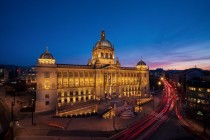
National museum (Národní muzeum) founded in 1818, located in several buildings in Prague and beyond.
Museum collections: Asian cultures, ethnographic, non-European ethnography, numismatic, non-European numismatics, Middle East and Africa in Antiquity, photographic of the Náprstek Museum, Náprstek inventory, Náprstek Museum archives, musical instruments, Department of Music History, Antonín Dvořák Museum, Bedřich Smetana Museum, book, book culture, manuscripts and early prints, historical journals, entomological, archeology, classical archeology, historical, theater, Museum of the Workers' Movement in the National Museum Archives, modern Czech history, Museum of the Workers' Movement, National Museum Archives, Czechoslovak Documentation Center, Department of the History of Physical Education and Sports - 3D objects, photo archive of the Department of the History of Physical Training and Sports, archives of the history of physical education and sports, paleontological, lichenological, anthropology, botanical and herbarium, mycological, geological, cut gemstones, petrographic, tektites, meteorites, mineralogical, mammals, fishes, invertebrates, excluding insects, amphibians and reptiles, birds.
All collections include over 20 million items.
|
| 167. |
166 |
House of the History |
Germany |
Bonn |
|
|
History
|
More |
Haus der Geschichte, Bonn (House of the History of the Federal Republic of Germany) together with the Zeitgeschichtliches Forum, Leipzig and Tränenpalast, Berlin and the Museum in der Kulturbrauerei, Berlin are part of the Haus der Geschichte Foundation, Bonn.
House of the History, Bonn opened to the public in 1994.
It presents the history of Germany in international terms from 1945 to the present.
The exhibition area of 4,000 square meters houses over 7,000 exhibits.
The House of the History and the German Historical Museum, in collaboration with the German Federal Archives, run the LeMO (Lebendiges Museum Online) Living Museum Online - an online portal on German history that covers the period from the 19th century to the present day. LeMO available online since 1999.
|
| 168. |
194 |
National Museum Bangkok |
Thailand |
Bangkok |
|
|
Archeology, history,... art, ethnography
|
More |
The National Museum Bangkok has been open since 1874.
The permanent exhibitions at the museum are divided into three parts:
1. The Thai History Gallery,
2. The Archeological and Art History Collections,
3. The Decorative Arts and Ethnological Collection.
In the museum you can see, among others: The King Ram Khamhaeng Inscription, royal coats of arms and insignia, ivory carvings, shadow puppets, Khon masks.
|
| 169. |
175 |
Military Museum of the Chinese People's Revolution |
China |
Beijing |
|
|
Military
|
More |
The Military Museum of the Chinese People's Revolution (Chinese Military Museum) opened to the public in 1960.
The museum collects, among other things, equipment from the Chinese space program, such as satellites and a two-seater orbital capsule, jet fighters, rockets, rocket launchers, cruise missiles, artillery, fleets, tanks, armored personnel carriers, anti-aircraft weapons, small arms, ammunition, military uniforms, flags , medals, badges, seals, coins, documents.
Among the collected objects you can see: Qin Terracotta Warriors, cars of Zhu De and Mao Zedong, Chinese first atomic bomb, A Dongfeng 2 (CSS-1) medium-range balltistic missile.
The collected collections span 5,000 years of Chinese history.
The museum has over 180,000 exhibits.
The museum building covers an area of 153,000 square meters, of which approximately 60,000 square meters are exhibition space.
|
| 170. |
217 |
Machu Picchu |
Peru |
Machu Picchu |
|
|
Archaeological park
|
More |
Machu Picchu - the best preserved city of the Incas.
Built from around 1450, abandoned in 1572, which was associated with the appearance of the conquistadors.
The most important monuments:
- Intihuatana stone,
- Temple of the Sun or Torreon,
- Room of the Three Windows,
- a special cave Inti Mach'ay.
Artifacts from Machu Picchu are on display at the Museo Machu Picchu, La Casa Concha.
|
| 171. |
202 |
Cologne Cathedral |
Germany |
Cologne |
|
|
Temple
|
More |
Cologne Cathedral Roman Catholic erected in the Gothic style. Built in 1248-1473 and 1842-1880. Length 144.58 meters, width 86.25 meters, height 157.38 meters. It holds, among others, the Shrine of the Three Kings from around 1180-1225 and the Crucifix of Bishop Gero from around 970.
|
| 172. |
169 |
Whitney Museum of American Art |
USA |
New York |
|
|
Art
|
More |
Whitney Museum of American Art opened to the public in 1931.
It collects works of 20th-century and contemporary American art focusing on the works of living artists. Collection volume of 25,000 paintings, sculptures, graphics, drawings, photographs, films, videos, installations, new media art representing over 3,500 artists. His collections include works by, among others: Edward Hopper, Georgia O’Keeffe, Alexander Calder, Robert Rauschenberg, Jasper Johns, Jackson Pollock, Roy Lichtenstein, Andy Warhol.
|
| 173. |
207 |
Denver Museum of Nature & Science |
USA |
Denver |
|
|
Natural history,... science and technology
|
More |
Denver Museum of Nature & Science opened to the public in 1908.
Museum collections gather exhibits in the fields of geology, palaeontology, zoology, anthropology, health sciences, and space sciences. The museum is richly equipped with dioramas. It also has a collection of crystallized gold and a full-size replica of the Mars exploration rover, among others.
The Denver Museum of Nature & Science is in possession of 4.3 million artifacts and specimens, of which 2 percent can be seen at permanent exhibitions.
|
| 174. |
387 |
Westminster Abbey |
United Kingdom |
London |
|
|
Temple
|
More |
The Westminster Abbey built from the 10th century. The present church was built in the 13th century in the Gothic style.
The abbey, from the beginning of its history it was a Roman Catholic church and from 1539 it became a Church of England ("Royal Peculiar" - a church responsible directly to the sovereign).
The abbey, beginning with William the Conqueror (from 1066), is the site of the coronation of the kings of England and Great Britain. Since the 13th century, the abbey has also been the burial place of kings and distinguished persons.
The Westminster Abbey Museum has been open since 1908.
The width of the nave is 26 meters, the height of the nave is 31 meters, floor area is 3,000 square meters. The height of the towers is 69 meters.
|
| 175. |
168 |
Topkapı Palace Museum |
Turkiye |
Istanbul |
|
|
Historic house
|
More |
Topkapı Palace Museum opened in 1924.
Topkapı Palace was the residence of the Ottoman sultans. The construction of the palace began in 1459. Main parts of the palace: Imperial Gate, Four Courtyards, Harem, Imperial Treasury. Topkapı Palace covers an area of approximately 650,000 square meters.
The museum's collections include: Topkapı Dagger, Spoonmaker Diamond, religious relics, a collection of Ottoman and European weapons and armor, a collection of Chinese porcelain.
|
| 176. |
172 |
Museums Victoria |
Australia |
Melbourne |
|
|
Natural history,... cultural history, science and technology
|
More |
Museums Victoria (MV) founded in 1854.
The MV includes, among others: Melbourne Museum, Immigration Museum, Scienceworks, Royal Exhibition Building, Bunjilaka Aboriginal Cultural Center. The MV collection includes, among others, paleontology, zoology, artifacts of traditional indigenous cultures of Australia and the Pacific. The entire collection is over 17 million exhibits.
|
| 177. |
228 |
Israel Museum |
Israel |
Jerusalem |
|
|
Art, archeology
|
More |
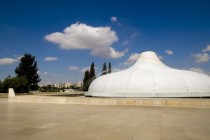
The Israel Museum founded in 1965.
It collects encyclopedic collections from prehistory to contemporary art.
Its collections include: Dead Sea Scrolls, works by Rembrandt, Peter Paul Rubens, Camille Pissarro, Auguste Rodin, Marc Chagall, Pablo Picasso, Henry Moore.
The entire collection has over 500,000 items.
The Israel Museum occupies an 8-hectare campus and the Rockefeller Archaeological Museum and the Ticho House.
Photo © Israel Museum, Jerusalem by Elie Posner
|
| 178. |
673 |
Mysore Palace |
India |
Mysore |
|
|
Historic house
|
More |
The Mysore Palace was the official residence of the Princely State of Mysore.
The palace was built in the years 1897-1912 in the Indian-Saracenic style.
Palace dimensions; length 74.7 meters, width 47.5 meters, height 44.2 meters.
The Residential Museum is located in the palace complex.
In the palace, you can see, among others: a jeweled golden throne and a golden howdah (elephant seat).
|
| 179. |
1074 |
Iziko Museums of South Africa |
South Africa |
Cape Town |
|
|
Natural history,... archeology, history, art
|
More |
Iziko Museums of South Africa established in 1825.
Iziko Museums of South Africa is a combination of the following museums:
- Bertram House,
- Bo-Kaap museum,
- Groot Constantia,
- Koopmans-de Wet House,
- Maritime Centre,
- Old Town House,
- Planetarium,
- Rust en Vreugd,
- Slave Lodge,
- South African Museum (has over one and a half million specimens in its collection),
- South African National Gallery,
- South African National Gallery Annexe,
- Social History Centre,
- The Castle of Good Hope.
|
| 180. |
273 |
Alhambra |
Spain |
Granada |
|
|
Historic house
|
More |
Alhambra a fortified palace complex originally built in 889 as a small fortress. Nasrid palaces, the final period of the flourishing of Islamic art in the Iberian Peninsula, were built in the mid-thirteenth century. The Alhambra was expanded many times, among others in the fourteenth century, sixteenth century and the first half of the seventeenth century in the spirit of Renaissance and Mannerism, in the twentieth century numerous renovations and conservation works were carried out. The main monuments of the Alhambra include: Court of the Lions and fountain, Hall of the Ambassadors, Generalife, Palace of Charles V.
They are in the Alhambra: Museum of the Alhambra (archeological), Museum in Honor of Ángel Barrios (dedicated to the composer) and the art gallery of the city of Granada.
The Alhambra covers an area of approximately 14.2 hectares.
|
| 181. |
170 |
Indian Museum |
India |
Kolkata |
|
|
Natural history,... anthropology, archeology, art
|
More |
The Indian Museum founded in 1814.
Its collections include geology, botany, zoology, anthropology, archeology (including ancient Egypt) and Indian art (such as Mughal paintings).
There are over 1,000,000 exhibits in total.
|
| 182. |
195 |
Château de Chambord |
France |
Chambord |
|
|
Historic house
|
More |
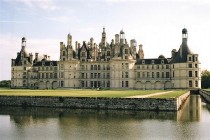
Château de Chambord built between 1519 and 1547 in the style of the French Renaissance for the French King Francis I.
The largest of the castles in the Loire Valley. It is built on a rectangular plan, in the corners of which there are towers, each 20 meters in diameter, and it is surrounded by a moat. The facade is 156 meters long. Height 56 meters. The castle has 440 rooms, 84 staircases (14 main and 70 smaller ones) and 282 fireplaces.
Several rooms in the castle are used as the Musée du comte de Chambord (Henri d'Artois 1820-1883).
|
| 183. |
143 |
Museum of New Zealand Te Papa Tongarewa |
New Zealand |
Wellington |
|
|
Archeology, ethnography,... history, natural history
|
More |
The Museum of New Zealand Te Papa Tongarewa founded in 1992.
The museum's collections include, among others, collections of Maori and Pacific cultures, a historical collection (e.g. New Zealand post archive with about 20,000 stamps), a collection of furniture and other antiques, natural history collections (e.g. fossils, herbarium [about 260,000], amphibians, reptiles, birds [about 70,000], mammals), the world's largest specimen of a rare colossal squid (Mesonychoteuthis hamiltoni). The museum building has an area of 36,000 square meters.
|
| 184. |
170 |
Field Museum |
USA |
Chicago |
|
|
Natural history
|
More |
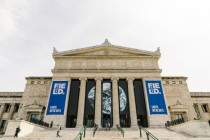
The Field Museum dates back to 1893.
The Field Museum has collections in zoology, evolutionary biology, geology, and palaeontology. Including the Tyrannosaurus Rex skeleton called Sue, the largest and most complete (90%) T-Rex skeleton discovered so far. The entire collection is complemented by archeology, anthropology, ethnography and cultural artifacts from around the world.
The Field Museum has collected nearly 40 million artifacts and specimens.
© Field Museum, Lucy Hewett
|
| 185. |
295 |
Institut Valenciá D'Art Modern |
Spain |
València |
|
|
Art
|
More |
Institut Valenciá D'Art Modern (IVAM; Valencian Institute of Modern Art) opened in 1989.
The IVAM collection includes over 11,300 works (5,000 of which are photographs) by modern and contemporary artists, mainly from Valencia, Spain, Europe, Latin America and North America.
The collections are divided thematically:
- Ignacio Pinazo (1849-1916) and Julio González (1876-1942) - the beginnings of modernity,
- analytical abstraction,
- phenomenal and dada poetics,
- gestures informalism,
- reality and its chronicles,
- city cartography,
- individual mythologies and the present 1980-2010.
|
| 186. |
277 |
Bardo National Museum |
Tunisia |
Tunis |
|
|
National - archeology,... art
|
More |
The Bardo National Museum was established in 1882. It was officially opened to the public on May 7, 1888.
The Bardo National Museum houses one of the most significant archaeological collections in the Mediterranean region. Its collections span prehistoric, Punic, Roman, early Christian, Islamic, and modern periods of Tunisian history. Here are some highlights:
1. Roman Mosaics (Largest Collection in the World)
- The museum is famous for its extensive collection of Roman mosaics, considered one of the finest in the world.
- Notable pieces include:
• The Virgil Mosaic – Depicting the poet Virgil with the Muses.
• The Triumph of Neptune – A massive mosaic from Dougga.
• The Mosaic of the Cyclops Polyphemus – From ancient Bulla Regia.
2. Punic Artifacts (Carthaginian Heritage)
- Artifacts from ancient Carthage, including Punic sarcophagi, jewelry, amulets, and stelae from the Tophet (a sacrificial burial site).
- Objects from Punic sanctuaries and tombs.
3. Greek and Roman Sculptures
- Marble busts of Roman emperors.
- Statues of gods and goddesses from sites like Dougga, Thuburbo Majus, and Carthage.
4. Early Christian and Byzantine Collections
- Christian mosaics, sarcophagi, and objects from churches and basilicas in Tunisia.
- Byzantine-period jewelry and liturgical objects.
5. Islamic Art and Medieval Tunisia
- Manuscripts, Qur'anic texts, and calligraphy.
- Ceramics and glazed pottery from Kairouan and Mahdia.
- Wooden panels and stucco decorations from palaces and mosques.
6. Numismatic Collection (Coins)
- Coins from different periods, including Punic, Roman, Byzantine, and Islamic coins.
7. Prehistoric Artifacts
- Stone tools, pottery, and artifacts from prehistoric sites in Tunisia.
According to available information, the museum holds over 8,000 exhibits.
The Bardo National Museum covers an area of approximately 20,000 square meters. The exhibition area is approximately 9,000 square meters.
|
| 187. |
288 |
Tower of London |
United Kingdom |
London |
|
|
Historic house
|
More |
Tower of London defensive and palace structure of the monarchs of England, used in the past also as a prison. The main building of the White Tower was erected in 1078 for William the Conqueror. Today the Tower of London is managed by Historic Royal Palaces. The Tower of London stores numerous armor, weapons, jewels and coronation insignia, e.g. the scepter with the world's largest Cullinan I diamond and the the Crown Jewels decorated with the world's second-largest Cullinan II diamond. The Tower of London is currently a tourist attraction of London open to visitors. The Tower of London is home to the Fusiliers Museum. The Tower of London covers an area of 4.9 hectares.
|
| 188. |
187 |
Indira Gandhi Rashtriya Manav Sangrahalaya |
India |
Bhopal |
|
|
National - anthropology,... ethnography
|
More |
Indira Gandhi Rashtriya Manav Sangrahalaya (IGRMS) or National Museum of Mankind, an autonomous organisation of the Ministry of Culture, Government of India, began functioning in March 1977 to present the living vulture of the diverse culture of communities across India. It has a regional Centre in Southern India at Mysore that started functioning in October 2001 from a heritage building 'Wellington House' allotted by the Government of Karnataka.
The mandate of the Museum includes the presentation of an integrated story of the bio-cultural evolution of humankind through outdoor and indoor exhibitions by highlighting the richness and diversity of cultural patterns of India and its underlying unity; to act as a Centre of research and training in museology and generate a new museum movement in India and to present and preserve a variety of cultural life.
IGRMS is also working for national integration, and promoting research & training and inter-organizational networking for salvage and revitalisation of vanishing, but valuable cultural traditions. The innovative aspects of the organization are its open-air and indoor exhibitions, built with the active involvement of traditional artisans and experts drawn from different community groups, and the education, outreach & salvage activities in different parts of the country.
Through its exhibitions, education programmes and salvage activities, IGRMS demonstrates the aesthetic qualities of India's traditional lifestyles, and the continued relevance of local traditional knowledge and mores of people to the modern society and cautions the people against unprecedented destruction of ecology and environment, local values and customs.
The programmes and activities of the organisation are carried out under three sub-schemes namely:
1. Infrastructure Development : (Development of Museum Complex),
2. Education and Outreach Programme,
3. Operation Salvage.
|
| 189. |
223 |
Notre-Dame de Paris |
France |
Paris |
|
|
Temple
|
More |
Notre-Dame de Paris (Cathédrale Notre-Dame de Paris) was constructed between 1163 and 1345, taking nearly 200 years to complete. It is one of the finest examples of French Gothic architecture.
Key Features of the Style:
- Pointed Arches: Used in windows, doors, and vaults for structural and aesthetic reasons.
- Ribbed Vaults: Allowed for higher ceilings and more complex roof designs.
- Flying Buttresses: First used extensively at Notre-Dame, these external supports countered the lateral thrust of the tall walls, enabling larger windows.
- Rose Windows: Notable circular stained-glass windows, especially the North and South Rose Windows.
- Sculptural Decoration: Richly adorned with gargoyles, statues of saints, and scenes from biblical stories.
Notre-Dame embodies the transition from Romanesque to Gothic architecture, blending intricate design with engineering innovation.
Notre-Dame de Paris is treasured not only for its architectural grandeur but also for the historic artifacts and symbolic significance it houses. Here are some of the most valuable aspects:
1. Religious Relics
Notre-Dame is home to some of the most sacred Christian relics:
- Crown of Thorns: Believed to have been worn by Jesus Christ during his crucifixion. It is the most famous relic housed at Notre-Dame.
- Fragment of the True Cross: Allegedly a piece of the cross on which Jesus was crucified.
- One of the Holy Nails: Said to have been used in Christ's crucifixion.
These relics are preserved in a specially designed reliquary and are venerated by pilgrims worldwide.
2. Stained Glass Windows
- The Rose Windows (North, South, and West) are masterpieces of Gothic art, dating back to the 13th century. They depict biblical scenes and saints in vivid colors and intricate patterns.
- These windows are not only beautiful but also an invaluable record of medieval craftsmanship and artistry.
3. Sculptures and Statues
- The Gallery of Kings: A series of statues depicting 28 biblical kings of Judah, positioned above the entrance portals.
- Gargoyles and Chimeras: Functional as rainwater spouts and symbolic protectors of the cathedral.
4. The Great Organ
- One of the largest and most famous pipe organs in the world, with five keyboards and nearly 8,000 pipes, some dating back to the 18th century. It is a cornerstone of Notre-Dame’s musical heritage.
5. The Bells
- The cathedral’s bells, especially the great bourdon bell "Emmanuel", have been iconic symbols of French history, ringing during major national and religious events.
Overall Dimensions:
- Length: 128 meters
- Width: 48 meters
- Height of Towers: 69 meters
- Height of the Spire: 96 meters
|
| 190. |
190 |
Hiroshima Peace Memorial Museum |
Japan |
Hiroshima |
|
|
Memorial
|
More |
Hiroshima Peace Memorial Museum opened in 1955.
The museum is dedicated to documenting the atomic bombing of Hiroshima at the end of World War II. In the museum, you can follow the course of the war and learn about the international situation at that time, the consequence of which was the decision to drop the bomb. Museum exhibitions show Hiroshima before and after the bombing, things that belonged to the victims of the bombing. The original exhibits are accompanied by numerous photographs and projection maps. The exhibitions show the effects of the explosion itself and the radiation that followed it, as well as the effects of aftershocks. The exhibition ends with information about the nuclear age and efforts to achieve international peace.
|
| 191. |
329 |
La Venaria Reale |
Italy |
Venaria Reale (Turin) |
|
|
Historic house
|
More |
La Venaria Reale (950,000 square meters of property) includes Reggia di Venaria Reale (Palace, 80,000 square meters), Gardens, Castello de La Mandria (Castle) and the Park of La Mandria.
The main stage of the construction of the baroque palace lasted from 1658 to 1675 during the reign of Carlo Emanuele II of Savoy.
Particular attention should be paid to: Galleria Grande, chapel, Juvarra stables, Reggia di Diana.
|
| 192. |
296 |
Angkor |
Cambodia |
Siĕm Réab |
|
|
Temple, archaeological... park
|
More |
Angkor is the largest religious monument in the world. It was mainly built in the first half of the 12th century as a royal state temple and capital of the Khmer Empire. The entire complex includes 45 facilities, including:
- Angkor Wat, which is the pinnacle of the classicist style of Khmer architecture; it is a unique combination of two plans of Khmer temple architecture, the temple-mountain and the later concentric galleries; height 65 meters; is located on an area of over 162 ha,
- Bayon,
- Bakheng,
- Bakong,
- Banteay Kdei,
- Banteay Samre,
- Banteay Srei,
- Beng Mealea,
- East Mebon,
- Kravan,
- Lolei,
- Neak Pean,
- Preah Khan,
- Preah Ko,
- Pre Rup,
- Takeo,
- Ta Prohm,
- Baphuon,
- Baksei-Chamkrong,
- Phimeanakas.
The following are based in Angkor:
- Preah Norodom Sihanouk-Angkor Museum,
- Ceramics Museum,
- MGC Asain Traditional Textiles Museum.
|
| 193. |
2222 |
Museum of Contemporary Art Australia |
Australia |
Sydney |
|
|
Art
|
More |
Museum of Contemporary Art Australia (MCA) established 1991.
It collects contemporary art from Australia (has over 4,500 works by Australian artists) and around the world.
|
| 194. |
242 |
Great Wall of China |
China |
North-East China |
|
|
History, military,... archaeological park
|
More |
The Great Wall of China - a system of fortifications in North-East China (south of the Mongolian steppe), the total length is over 20,000 km.
The fortifications were built from the 7th century BC to the 19th century AD.
The Great Wall of China museums are located in:
- Badaling, Yanqing District (within Beijing municipality), opened in 1994, covers an area of 3,200 square meters,
- Jiayuguan City, Gansu Province, built in 2001, covers an area of 12,312 square meters with an exhibition area of about 1,766 square meters, has more than 6,000 cultural monuments,
- Shanhaiguan, Shanhaiguan District, Prefecture-level city Qinhuangdao, Province Hebei, opened in 1991.
|
| 195. |
360 |
Mucem, Museum of the Civilizations of Europe and the Mediterranean |
France |
Marseille |
|
|
Anthropology, archeology,... ethnography, art
|
More |
The Mucem, Museum of the Civilizations of Europe and the Mediterranean was opened in 2013.
The total area is 45,000 square meters, of which the exhibition area is 4,900 square meters.
The museum has collected over a million objects and documents in its collections.
The Mucem presents exhibitions in the field of anthropology, archeology, history and art.
|
| 196. |
215 |
Kinkaku-ji |
Japan |
Kyoto |
|
|
Temple
|
More |
Kinkaku-ji (Gold Pavilion) is part of the Zen Buddhist complex of temples founded at least in the 14th century.
There is a Jotenkaku Museum in the Shokoku-ji main temple area of the complex. The Jotenkaku Museum houses, among others, 5 National Treasures of Japan. The museum exhibits works by painters such as Tensho Shubun, Sesshu Toyo, Josetsu and Ito Jakuchu.
The temple complex also includes the Ginkaku-ji (Silver Pavilion).
|
| 197. |
244 |
Calouste Gulbenkian Museum |
Portugal |
Lisbon |
|
|
Art
|
More |
Calouste Gulbenkian Museum opened in 1969. The founder of the museum, as well as the Centro de Arte Moderna (CAM) and the Gulbenkian Art Library, is the Calouste Gulbenkian Foundation.
The collection includes works of art from ancient Egypt, Mesopotamia, Greece and Rome, Islamic art, Chinese art, Japanese art, Armenian art as well as 18th-century French decorative art, René Lalique jewelry and works by European masters such as Rembrandt, Hals, Ruisdael, Rubens, Fragonard, Boucher, Rodin, Monet, Renoir, Manet, Degas, Gainsborough, Turner.
The collection includes 6,000 works of art, of which over one thousand are on permanent exhibitions.
Calouste Gulbenkian Foundation, Lisbon. Photo: © Ricardo Oliveira Alves
|
| 198. |
519 |
Art Gallery of Ontario |
Canada |
Toronto |
|
|
Art
|
More |
The Art Gallery of Ontario (AGO) was founded in 1900.
The AGO has in its collection sculptures in bone and stone as well as Inuit drawings. Canadian art is represented mainly by 19th and 20th century landscape painters and 20th century avant-garde artists. The AGO collection includes works of art by, for example, Pieter Brueghel the Younger "Country wedding", Peter Paul Rubens "The Massacre of the Innocents", Claude Monet "Charing Cross Bridge: Fog", Edgar Degas "Woman in Bath", Renoir "Concert", Pablo Picasso "Seated Woman", Marc Chagall "Over Vitebsk", Paul Gauguin "Hina and Fatu", Andy Warhol "Elvis" and numerous sculptures by Henry Moore.
The AGO has over 90,000 exhibits in its collection, 4,000 of them are presented at exhibitions.
The AGO facilities cover an area of over 54,160 square meters.
|
| 199. |
2802 |
Eiffel Tower |
France |
Paris |
|
|
Monument, technology,... history
|
More |
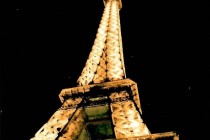
The Eiffel Tower built in two years by Gustave Eiffel for the World Exhibition in 1889.
It is a wrought iron truss tower.
The height of 330 meters. At the base, on a square plan with a side of 125 meters. The tallest building in the world from its inception to 1930.
On the third floor platform you can see a reconstruction of the wax museum type, showing Gustave Eiffel receiving Thomas Edison.
|
| 200. |
162 |
Emperor Qinshihuang's Mausoleum site Museum |
China |
Xi'an |
|
|
Mausoleum
|
More |
Emperor Qinshihuang's Mausoleum site Museum was opened in 2009.
The mausoleum of the First Emperor Qinshihuang was built from 246 to 208 BC. The mausoleum is not fully exposed yet, and archaeological work is ongoing there. In the course of works carried out since 1974, among others, the Terracotta Army was discovered.
It covers an area of 56,25 square kilometers.
|
| 201. |
213 |
Museu Nacional da República |
Brazil |
Brasilia |
|
|
Art
|
More |
Museu Nacional da República also called Honestino Guimarães Museu Nacional inaugurated in 2006.
Together with the National Library of Brasília, it is part of The Complexo Cultural da República.
Museu Nacional da República it is a space that inserts Brasília into the international arts circuit and shows the best in Brazilian art. The space is used for itinerant exhibitions by renowned artists and themes important to society, lectures, film shows, seminars and important events.
The most important temporary exhibitions to date include:
- Niemeyer & Niemeyer e Brasília - Patrimônio da Humanidade (2006),
- Imagens impressas: Um percurso histórico pelas gravuras da Coleção Itaú Cultural (2018).
The museum consists of an exhibition section divided into three floors connected by ramps and a mezzanine with an area of 14,500 square meters, two auditoriums with 780 seats and a laboratory.
|
| 202. |
425 |
ArtScience Museum |
Singapore |
Singapore |
|
|
Art, science and... technology
|
More |
The ArtScience Museum was opened in 2011.
The ArtScience Museum presents important traveling exhibitions linking art, science, culture and technology. The exhibitions organized by the museum were devoted to the works of Leonardo da Vinci, Vincent Van Gogh, Salvador Dalí, Andy Warhol, among others, as well as elementary particle physics, robotics, palaeontology, marine biology and space exploration. Examples of other exhibitions:
- Traveling the Silk Road: Ancient Pathway to the Modern World (2011),
- Shipwrecked: Tang Treasures and Monsoon Winds (2011),
- Titanic: The Artifact Exhibition (2011-2012),
- Cartier Time Art (2011-2012),
- Mummy: Secrets of the Tomb (2013),
- Dinosaurs: Dawn to Extinction (2014).
The ArtScience Museum has 21 galleries with a total area of 6,000 square meters.
|
| 203. |
161 |
Fabergé Museum |
Russia |
St Petersburg |
|
|
Art
|
More |
Fabergé Museum opened in 2013.
The museum owns the world's largest collection of Carl Fabergé's masterpieces, with over 1,000 items, including 9 Easter eggs made for the last two Russian emperors. The entire collection includes over 4,000 works of art and applied arts. These are mainly gold and silver items, paintings and porcelain from the 18th to the beginning of the 20th century.
|
| 204. |
179 |
Zona Arqueológica de Monte Albán |
Mexico |
Oaxaca de Juárez |
|
|
Archaeological park
|
More |
Monte Albán is one of the first cities in Mesoamerica, founded 500 years BC. It functioned as the ancient capital of the Zapotecs from the beginning of AD until 800 AD.
The city center is occupied by the monumental Main Plaza bordered to the north and south by large platforms. A series of smaller platform mounds surround the Main Plaza to the east and west. On the platforms to which the large stairs lead, there are, among others: Ballgame Court, Pyramid Complex, Palace.
In front of the city entrance on the north side are the Tomb Complex and the Museo de Sitio de Monte Albán. In the museum, you can see stone carvings called "Danzantes" depicting tortured and sacrificed prisoners of war. Zona Arqueológica de Monte Albán covers an area of 4,000 hectares.
|
| 205. |
569 |
Tianjin Natural History Museum |
China |
Tianjin |
|
|
Natural history
|
More |
The origins of the Tianjin Natural History Museum date back to 1914. It has been operating in its present organizational form since 1952.
In the museum, we will see various dinosaurs such as: Tyrannosaurus Rex or Triceratops.
The museum houses over 400,000 geological, palaeontological and biological specimens.
The museum covers an area of 50,000 square meters, of which 35,000 square meters are in the buildings. Exhibition area of 14,000 square meters.
|
| 206. |
254 |
Museum of Science and Industry |
USA |
Chicago |
|
|
Science and technology
|
More |
Museum of Science and Industry opened in 1933.
In the museum you can see, among others:
- the first diesel-powered, streamlined stainless-steel train, the Pioneer Zephyr,
- 999 Empire State Express steam locomotive,
- a working, full-size replica of a hard coal mine,
- German submarine U-505 from World War II,
- the first Boeing 727 jet plane in commercial service,
- Apollo 8 spacecraft.
The entire collection includes more than 35,000 artifacts, of which more than 2,000 exhibits are displayed in 75 main rooms.
The museum has over 37,160 square meters of exhibition space.
|
| 207. |
264 |
Tikal |
Guatemala |
Flores |
|
|
Archaeological park
|
More |
Tikal is a ruin of a Mayan city that functioned from the 4th century BC to the 10th century AD. The greatest development of the city of Tikal is in the years from about 200 to about 900.
The architecture of Tikal includes 6 main temples in the form of pyramids, the highest of which is 65 meters high, monumental royal palaces, smaller mansions, a number of administrative buildings, platforms, altars, lintels, stelae, burials.
Highlights of Tikal: Great Plaza, Central Acropolis, North Acropolis, South Acropolis, Plaza of the Seven Temples, Mundo Perdido, nine Twin-Pyramid Complexes.
The former city is located in Tikal National Park, which covers 575 square kilometers of jungle and thousands of ruined buildings.
Tikal National Park is home to the Stelae Museum and the Sylvannus G. Morley Museum.
|
| 208. |
241 |
St. Stephen's Cathedral |
Austria |
Vienna |
|
|
Temple
|
More |
St. Stephen's Cathedral (Domkirche St. Stephan) is the third temple erected on the same site from 1137 to 1511. The Gothic cathedral with older Romanesque elements is built of limestone.
Length 107 meters, width 70 meters, height 136.7 meters.
Inside, numerous altars are stored, including the Baroque main altar and the Gothic Wiener Neustadt Altar, the Gothic tomb of Emperor Frederick III, and the late-Gothic sandstone pulpit.
|
| 209. |
3302 |
Philadelphia Art Museum |
USA |
Philadelphia |
|
|
Art
|
More |
The Philadelphia Art Museum (PhAM) was founded in 1876.
It has significant collections of European, American and Asian art. The PhAM includes, among others: the world's largest collection of works by Marcel Duchamp, an important collection of sculptures by Auguste Rodin, important paintings by Édouard Manet, Claude Monet, Pierre-Auguste Renoir, Paul Cézanne and Vincent van Gogh, the richest collection of paintings in the USA by Thomas Eakins, a collection of Paul Strand's photographs, Shakers' crafts, numerous "period rooms" and architectural ensembles from around the world, e.g. from China, India, Japan, United Kingdom and France, a collection of weapons and combat gear second largest in the USA.
The entire collection of the PhAM includes over 240,000 exhibits.
|
| 210. |
398 |
Serralves Museum |
Portugal |
Porto |
|
|
Art
|
More |
The Serralves Museum was opened in 1999.
It is a museum of contemporary art where you can see works by artists such as Franz West, Claes Oldenburg or Richard Hamilton at temporary exhibitions (no permanent exhibitions).
The museum building covers an area of 13,000 square meters, including 4,500 square meters for exhibition space.
|
| 211. |
243 |
Palacio Real de Madrid |
Spain |
Madrid |
|
|
Historic house
|
More |
Palacio Real de Madrid (Royal Palace of Madrid) built between 1735-1764 in the classical baroque style. It is the official residence of the Spanish royal family and the largest royal palace in Western Europe. It has 3,418 rooms and covers an area of 135,000 square meters.
The palace is decorated with frescoes by Giovanni Battista Tiepolo and Anton Raphael Mengs. The interiors exhibit oil paintings by artists such as Caravaggio, Francisco de Goya, Velázquez and a set of five string instruments made by Antonio Stradivari (Stradivarius Palatinos). The palace houses, among others, the Royal Armory and the Crown Room.
The origins of the museum date back to 1935.
|
| 212. |
315 |
Royal Museums of Fine Arts of Belgium |
Belgium |
Brussels |
|
|
Art
|
More |
Royal Museums of Fine Arts of Belgium founded in 1803.
It consists of the Oldmasters Museum, Modern Museum, Magritte Museum, Fin-de-Siècle Museum, Meunier Museum, Wiertz Museum. It has 20,000 paintings, sculptures and drawings that date from the beginning of the 15th century to the present day. The collected works of art are by, among others: Pieter Bruegel, Peter Paul Rubens, Jacques Jordaens, Paul Gauguin, Vincent van Gogh, Salvador Dalí, Paul Delvaux, René Magritte, Henry Moore.
|
| 213. |
168 |
German Historical Museum |
Germany |
Berlin |
|
|
History
|
More |
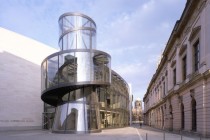
The German Historical Museum (DHM) was founded in 1987 and opened its first exhibitions to the public in 1991.
DHM presents the history of Germany from the Middle Ages (when formally there was no country using the name Germany) to the present day in an international context.
The collection comprises about 1,000,000 exhibits. You can see, among others, the boat that escaped two GDR citizens or the prosthetic hand of a medieval knight.
|
| 214. |
368 |
Qatar Museums |
Qatar |
Doha |
|
|
Art, archeology,... history
|
More |
The Qatar Museums includes:
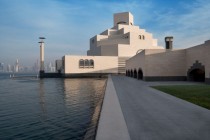
- Museum of Islamic Art (MIA), opened in 2008, covers an area of 45,000 square meters, about 10% of the collection can be seen in permanent exhibitions,
- Mathaf: Arab Museum of Modern Art, opened in 2010, covers an area of 5,500 square meters, has a collection of over 9,000 works of art,
- National Museum of Qatar, opened in 2019, covers an area of 40,000 square meters, the collection consists of approximately 8,000 objects,
- QM Gallery Katara,
- QM Gallery Alriwaq,
- Garage Gallery, Fire Station.
Soon to open: Qatar Children's Museum, Orientalist Museum, 3-2-1 Qatar Olympic and Sports Museum, M7.
|
| 215. |
634 |
Red Fort |
India |
Delhi |
|
|
Historic house,... monument
|
More |
Red Fort (Lal Qila) was the main residence of the Mughal emperors built between 1638 and 1648 in the style of Indo-Islamic architecture.
Main objects:
- Lahori Gate
- Delhi Gate
- Diwan-i-Khas (Hall of Private Audience)
- Moti Masjid (Pearl Mosque)
- Naubat Khana ("Waiting Hall")
The Red Fort has:
- Drishyakala Museum (art)
- Red Fort Archaeological Museum
- Indian War Memorial Museum
The Red Fort has an area of over 103 hectares.
|
| 216. |
187 |
Nationalmuseum |
Sweden |
Stockholm |
|
|
National - art,... design
|
More |
The history of the Nationalmuseum dates back to 1792.
Collections include:
- paintings, sculptures, drawings and graphics from 1500-1900, including the 17th-century Rembrandt collection
- portraits from the early Middle Ages to the present day
- the world's largest collection of portrait miniatures, with over 5,200 works
- porcelain collections
- modern art
- applied art and design
The collections number approximately 700,000 objects, of which 500,000 are drawings.
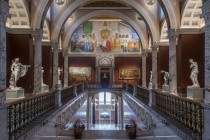
Nationalmuseum Stockholm, interior Upper Staircase. Photo Anna Danielsson, Nationalmuseum
|
| 217. |
199 |
Yad Vashem |
Israel |
Jerusalem |
|
|
Memorial
|
More |
Yad Vashem founded in 1953, open to the public in 1957 is the World Holocaust Remembrance Center. Yad Vashem commemorates the Righteous Among the Nations.
Yad Vashem is a complex with an area of over 18 hectares. It houses various museums, archives, research and education centers, monuments and memorials. Among others: Holocaust History Museum with a new Hall of Names and a Museum of Holocaust Art.
|
| 218. |
428 |
Reggia di Caserta |
Italy |
Caserta |
|
|
Historic house
|
More |
Reggia di Caserta - a royal palace, the construction of which began in 1752 for the Bourbon monarchy in the Later Baroque style and then continued in the Early Neoclassical style.
It is the largest palace built in Europe in the 18th century. By volume - 1 million cubic meters - it is by far the largest royal residence in the world. The dimensions of the palace are 247 × 184 × 42 meters. Occupied area of 235,000 square meters.
The palace is surrounded by 123 hectares of the Royal Park with numerous cascades and fountains. The Aqueduct of Vanvitelli, and the San Leucio Complex are located close to Reggia di Caserta. There is a Living Silk Museum in San Leucio with some original old looms and restored machinery showing all stages of silk production.
|
| 219. |
293 |
Museu Nacional d'Art de Catalunya |
Spain |
Barcelona |
|
|
Art
|
More |
Museu Nacional d'Art de Catalunya (MNAC) opened in 1934, officially inaugurated in 2004.
The MNAC has the world's most important collection of Romanesque wall paintings. Its collections also cover subsequent periods: Gothic, Renaissance, Baroque up to contemporary art. In the museum you can see paintings by such masters as: Titian, Rubens, El Greco, Velázquez, Goya. The art of Catalonia at the end of the 19th and beginning of the 20th century is represented by the works of, for example, Ramon Casas. The entire collection is completed by: Cabinet of Drawings and Prints, Numismatic Cabinet of Catalonia.
There are nearly 300,000 works of art in total.
|
| 220. |
637 |
Sharjah Museums |
United Arab Emirates |
Sharjah |
|
|
Art, history, religion,... archeology, science, maritime
|
More |
The Sharjah Museums Authority (SMA) was established in 2006 as an autonomous government authority. SMA includes:
AI Eslah School Museum (opened in 2003)
Al Mahatta Museum (opened in 2000)
Bait Al Naboodah (opened in 1995)
Bait Sheikh Saeed Bin Hamad Al Qasimi (opened in 1999)
Hisn Khor Fakkan (opened in 2019)
Sharjah Aquarium (opened in 2008)
Sharjah Archaeology Museum (opened in 1993)
Sharjah Art Museum (opened in 1997)
Sharjah Calligraphy Museum (opened in 2002)
Sharjah Classic Cars Museum (opened in 2002)
Sharjah Discovery Centre (opened in 1999)
Sharjah Fort (Al Hisn) (opened in 2015)
Sharjah Heritage Museum (opened in 2005)
Sharjah Maritime Museum (opened in 2003)
Sharjah Museum of Islamic Civilization (opened in 1996)
Sharjah Science Museum (opened in 1996)
|
| 221. |
258 |
National Museum of Modern Art |
Japan |
Kyoto |
|
|
Art
|
More |
National Museum of Modern Art (MoMAK) established in 1963.
It collects works of art from the 20th and 21st centuries.
MoMAK has in its collection works by such artists as: Tomioka Tessai, Wassily Kandinsky, Georges Braque, Tsuguharu Fujita, Marc Chagall, Barbara Hepworth, and David Hockney.
The total area of MoMAK is 9761.99 square meters, of which 2604.94 square meters is the exhibition space.
|
| 222. |
529 |
Instituto Tomie Ohtake |
Brazil |
São Paulo |
|
|
Art
|
More |
Instituto Tomie Ohtake was opened in 2001.
Instituto Tomie Ohtake organizes national and international exhibitions of fine arts, architecture and design. His interests include the art of the 20th and 21st centuries.
It does not have its own collection.
Its area is 7,500 square meters, most of this area is occupied by 7 exhibition rooms.
Credits by Ricardo Miyada
|
| 223. |
930 |
Shanghai Natural History Museum |
China |
Shanghai |
|
|
Natural history
|
More |
The Shanghai Natural History Museum was opened in 1956.
It is currently a branch of the Shanghai Science and Technology Museum.
The museum has in its collection exhibits from the field of botany, zoology, palaeobiology, geology and anthropology. There are over 280,000 objects from all over the world. More than 11,000 of them are on display. The largest exhibit, measuring more than 20 meters in length, that can be seen in the museum is the skeleton of the Mamenchisaurus hochuanensis Young et Zhao dinosaur from Sichuan Province. The age of the dinosaur is estimated at 140 million years.
The building area is 45,257 square meters, of which 32,200 square meters are dedicated to exhibitions, education and services.
|
| 224. |
349 |
Museum of Science |
USA |
Boston |
|
|
Science and technology,... natural history
|
More |
The Museum of Science (MoS) deduces its history back to 1830.
Permanent exhibitions include sciences and topics such as: mathematics, astronomy, human biology, robotics, computers, spacecraft, electricity, renewable energy, nanotechnology, rocks and minerals, plants, dinosaurs, birds, butterflies, stuffed and living animals.
MoS has 700 models and interactive exhibits.
MoS also includes the indoor zoo, the Charles Hayden Planetarium, the Mugar Omni Theater, and IMAX.
|
| 225. |
2143 |
Musée des Arts Décoratifs |
France |
Paris |
|
|
Decorative art
|
More |
The Musée des Arts Décoratifs (MAD) dates back to 1882.
It also includes the Musée Nissim de Camondo and the Ecole Camondo.
The collection includes original interior architecture, furniture, tapestries, wallpapers, ceramics and glass, as well as toys from the Middle Ages to the present day. It contains numerous works in the Art Nouveau and Art Déco styles. The collection is supplemented by rare examples of fashion, design and objects from the Middle East.
MAD owns over one million artifacts.
© MAD Paris - Photo Luc Boegly
|
| 226. |
378 |
Petra |
Jordan |
Petra |
|
|
Archaeological park
|
More |
Petra - a historic and archaeological city with numerous structures carved into the rocks.
The following periods are distinguished in the development of Petra's architecture:
- Nabatean (3rd-2nd century BC),
- Hellenistic (1st century BC - 1st century AD),
- Roman (2nd-3rd century AD),
- Byzantine (4th-6th century AD).
The most famous examples of Petra's architecture are:
- Al-Khazneh (Treasury),
- en-Nejr theater,
- the Urn Tombs,
- Qasr al-Bint temple,
- Ad Deir (Monastery).
Within the ancient city are the Petra Archaeological Park (PAP), which covers an area of 264,000 square meters, and the Petra Museum with its 280 artifacts.
|
| 227. |
451 |
Hungarian National Museum |
Hungary |
Budapest |
|
|
History, art, archeology
|
More |
Magyar Nemzeti Múzeum (Hungarian National Museum) founded in 1802.
In the museum you can see the coronation mantle ordered by King Stephen I and his queen consort Gisela in 1031, Scythian gold products, Seuso Treasure - silver vessels from the late Roman Empire (4th - 5th centuries), crown of Constantine IX Monomachos (Byzantium , 1042–1050), Mozart's traveling clavicord, a grand piano belonging first to Ludwig van Beethoven and later to Ferenc Liszt.
The museum covers an area of 8,000 square meters.
|
| 228. |
229 |
Museo Universitario Arte Contemporáneo |
Mexico |
Mexico City |
|
|
University – contemporary... art
|
More |
The Museo Universitario Arte Contemporáneo (University Museum of Contemporary Art) abbreviated MUAC at the Universidad Nacional Autónoma de México (National Autonomous University of Mexico) abbreviated UNAM was opened in 2008.
The MUAC houses the largest public collection of contemporary art in Mexico. It includes works by visual artists, sound art, audiovisual, kinetic and performative activities created mainly in Mexico after 1952 - the year UNAM was inaugurated.
|
| 229. |
172 |
Otago Museum |
New Zealand |
Dunedin |
|
|
Natural history,... ethnography, science and technology
|
More |
The Otago Museum opened to the public in 1868.
The museum presents, among others: Maori artifacts, moa eggs, a collection of spiders and arachnids, Japanese armor, sharp weapons from India, ancient coins, Islamic ceramics, There are over 1.5 million objects from all over the world.
The museum has an interactive science center divided into two parts, one deals with physics and technology and the other covers the Tropical Forest with live flora and fauna, including hundreds of butterflies.
|
| 230. |
227 |
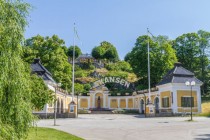
Skansen |
Sweden |
Stockholm |
|
|
Open-air museum
|
More |
The Skansen, founded in 1891, is one of the oldest and largest open-air museums in the world. On an area of 30 hectares, there are 150, in the vast majority, original, historic buildings which are a replica of a typical 19th-century city. In their houses, craftsmen dressed in traditional period costumes demonstrate their pre-industrial craftsmanship.
Part of the open-air museum is a zoo where you can see wild animals living in Scandinavia and domestic animals.
|
| 231. |
175 |
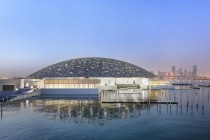
Louvre Abu Dhabi |
United Arab Emirates |
Abu Dhabi |
|
|
National - art
|
More |
Louvre Abu Dhabi, opened in 2017, presents art from prehistory to the present day in chronological order, including works by Leonardo da Vinci, Rembrandt van Rijn, Jacques-Louis David, Jean-Auguste-Dominique Ingres, Édouard Manet, Claude Monet, Vincent van Gogh, Paul Gauguin, Henri Matisse, René Magritte and others.
The museum covers an area of approximately 24,000 square meters.
© Department of Culture and Tourism Abu Dhabi Photo by Hufton+Crow
|
| 232. |
354 |
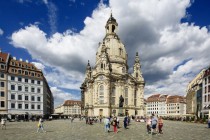
Frauenkirche Dresden |
Germany |
Dresden |
|
|
Temple
|
More |
Frauenkirche Dresden - Evangelical-Lutheran Church built in the years 1726–1743 in the baroque style. Destroyed during World War II in 1945, rebuilt in 1993–2005. „Brücken bauen - Versöhnung leben - Glauben stärken" - the motto of the rebuilt Frauenkirche Dresden.
It is the second largest sandstone building in the world. Total height 91.23 meters, length 50.02 meters, width 41.96 meters.
The Frauenkirche Dresden has an exhibition space in its basement. The exhibition consists of three parts:
- authentic exhibits (history of the destruction of the church)
- photographs and sketches (reconstruction process)
- computer (names of supporters)
Rechte Stiftung Frauenkirche Dresden
Foto Oliver Killig
|
| 233. |
188 |
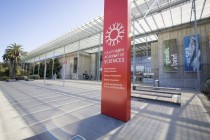
California Academy of Sciences |
USA |
San Francisco |
|
|
Natural history,... research institution
|
More |
The California Academy of Sciences traces its history from 1853.
The museum is accompanied by a planetarium, rainforest and aquarium - coral reef, tides and marsh habitats. The museum holds 46 million specimens. The exhibitions show, among others, the skeleton of Tyrannosaurus Rex, the albino American alligator, the albino reticulated python, and the Foucault pendulum.
The main building covers an area of 37,000 square meters.
© California Academy of Sciences
|
| 234. |
239 |
Zona Arqueológica de Palenque |
Mexico |
Palenque |
|
|
Archaeological park
|
More |
The oldest ruins of the Mayan city-state known today as Palenque date back to the 5th century BC. A city-state after the fall in the 9th century AD the jungle overgrown. The Spaniards first found themselves in Palenque in 1567, and in 1773 the exploration of the ruins began.
The most important buildings are Temple of the Inscriptions, Temples of the Cross group, Palace.
Among other things, the jade mask of King K'inich Janab Pakal and the mask of the Red Queen were found in the Palenque tombs.
By 2005, an area of approximately 2.5 square kilometers had been exposed from the jungle. It is estimated that it is not even 2% of the area occupied by the city-state, and over a thousand objects are still covered by the jungle.
Currently, Palenque is part of the Zona Arqueológica de Palenque (INAH) and the Parque Nacional Palenque. The Palenque houses the Museo de Sitio de Palenque 'Alberto Ruz Lhuillier' and the Museo del Textil Lak Puj Kul.
|
| 235. |
678 |
21st Century Museum of Contemporary Art |
Japan |
Kanazawa |
|
|
Contemporary art
|
More |
The 21st Century Museum of Contemporary Art opened in 2004.
The collection focuses on works created since 1980. The collection includes works by, among others: Gerhard Richter, James Turrell, Atsuko Tanaka, Anne Wilson, Leandro Erlich, Olafur Eliasson.
Museum area 17,069 square meters.
Photo: ISHIKAWA Koji
Courtesy: 21st Century Museum of Contemporary Art, Kanazawa
|
| 236. |
201 |
Centro Cultural Banco do Brasil |
Brazil |
Belo Horizonte |
|
|
Art
|
More |
Centro Cultural Banco do Brasil Belo Horizonte (CCBB BH) was opened in 2013.
It has, among others, 6 exhibition rooms, an educational program room, a multimedia room, and a cultural goods warehouse.
It has an area of 12,000 square meters.
Foto Vagner Costa
|
| 237. |
237 |
Leeum Samsung Museum of Art |
South Korea |
Seoul |
|
|
Art
|
More |
Leeum Samsung Museum of Art opened in 2004.
Leeum is divided into:
- Museum 1 - traditional Korean art - ceramics, including porcelain and stoneware, landscapes and folk paintings, manuscripts, swords, jewelry. Museum 1 covers an area of 2,300 square meters and a total area of 9,800 square meters.
- Museum 2 - contemporary Korean and international art - works e.g. Salvador Dalí, Joseph Beuys, Jesús Rafael Soto, Andy Warhol, Mark Rothko, Isamu Noguchi, Yves Klein, Jeans Arp, Bae Young-whan, Jean-Michel Basquiat, Frank Gehry, Koo Bon-woong. Museum 2 covers an area of 1,800 square meters and a total area of 5,200 square meters.
- Child Education & Culture Center covers an area of 4,000 square meters and a total area of 13,300 square meters.
- Sculpture Garden – e.g. Maman by Louise Bourgeois.
|
| 238. |
417 |
National Museum of Modern and Contemporary Art of Algiers |
Algeria |
Algiers |
|
|
Modern and contemporary... art and design
|
More |
The National Museum of Modern and Contemporary Art of Algiers (MaMa) was opened in 2007.
MaMa collects works of art in the field of painting, sculpture, graphics, photography, video, new media, industrial design from 1905 to the present day.
|
| 239. |
182 |
National Museum of the Village "Dimitrie Gusti" |
Romania |
Bucharest |
|
|
Ethnographic open-air... museum
|
More |
National Museum of the Village "Dimitrie Gusti" (Muzeul National al Satului "Dimitrie Gusti") founded in 1936.
On the premises of the museum there are farms, peasant houses, craft workshops, Orthodox churches, a chapel, an inn with interior furnishings such as furniture, ceramics, fabrics, tools. Most of the buildings are 17th to 20th century originals from all over Romania.
The permanent exhibition includes 123 separate complexes, which include 363 architectural monuments and over 50,000 artifacts.
The exhibition area is approximately 12.5 ha.
|
| 240. |
172 |
The Huntington |
USA |
San Marino |
|
|
Library, art museum,... botanical gardens
|
More |
The Huntington - Library, Art Museum, and Botanical Gardens founded in 1919, open to the public in 1928.
The library has approximately 11 million items from the 11th to 21st centuries.
The museum focuses on 18th and 19th century British painting and design (e.g. Thomas Gainsborough, Thomas Lawrence, William Morris) and American art from the 17th to 20th centuries (e.g. Mary Cassatt, Edward Hopper, Andy Warhol, Robert Rauschenberg).
The gardens cover 49 ha and show plants from all over the world.
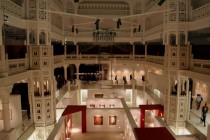
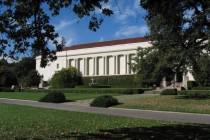
Photo: The Huntington Library Exhibition Hall exterior
|
| 241. |
336 |
National Museum of Colombia |
Colombia |
Bogotá |
|
|
National - art,... history, archeology, ethnography
|
More |
The National Museum of Colombia (Museo Nacional de Colombia) founded in 1823 is one of the oldest in the Americas.
The art collection includes works by Colombian artists such as Andrés de Santa María, Santiago Martínez Delgado, Gustavo Arcila Uribe, Fernando Botero as well as Latin American and European art. The museum's collection includes a treasury of pre-Columbian goldsmiths, a coat of one of the wives of the Inca emperor Atahualpa, a banner used by Francisco Pizarro during the conquest of Peru, a crown of gold, diamonds and pearls given to Simón Bolívar in Cuzco in 1825.
The museum has a collection of over 20,000 artifacts, of which about 2,500 are presented at exhibitions.
An area of 3,000 square meters.
|
| 242. |
246 |
Château de Fontainebleau |
France |
Fontainebleau |
|
|
Historic house
|
More |
The Palace of Fontainebleau is one of the largest French royal castles. The beginnings of the castle date back to the 12th century, rebuilt many times since the 16th century. The dominant styles are the late French Renaissance and the French version of Northern Mannerism.
The School of Fontainebleau (École de Fontainebleau) was active in the arrangement and furnishing of the palace in the years ca. 1530 - ca. 1610.
Total area of 45,000 square meters spread over 11 levels. Total rooms 1500.
Main interiors:
- Gallery of Francis I
- Ballroom
- Chapel of the Trinity
- Stairway of the King
- Queen's bedroom
- Boudoir of Marie-Antoinette
- Throne Room of Napoleon
- Gallery of Diana
- Apartments of Napoleon
- Theatre
- Chinese Museum
Main courtyards (all courtyards cover 28,000 square meters):
- Court of the White Horse
- Oval Court
- Court of the Fountain
The parks and gardens of Fontainebleau include:
- Garden of Diana
- English garden
- Pine Garden Cave
- Fountain de Bliaud
- Parterre and canal
- Carp pond
The entire park complex covers 130 hectares.
The palace became a national museum in 1927.
More than 300,000 works in collections.
The Museum of Napoleon I was established in the palace in 1986.
|
| 243. |
301 |
Anne Frank House |
Netherlands |
Amsterdam |
|
|
Biographical
|
More |
Anne Frank House opened in 1960.
Anne Frank House is a museum dedicated to Anne Frank, a young German-Dutch girl of Jewish origin, the author of a diary first published in Dutch in 1947, translated into over 70 languages, who hid with her family and four friends at the back of a 17th-century building in Amsterdam against the Nazi persecution during World War II. The museum displays memorabilia related to the life of Anne Frank and her hideout, and organizes exhibitions on various forms of discrimination and persecution.
|
| 244. |
161 |
Stonehenge |
United Kingdom |
Wiltshire |
|
|
Monument
|
More |
Stonehenge is a prehistoric structure consisting of a circle of standing stones surrounded by embankments. Built from 3100 BC to 2000 BC. Stonehenge was probably associated with the cult of the Moon and the Sun, and could also have been a cemetery from the very beginning.
The present appearance of the monument is the result of renovation and reconstruction works carried out in the 20th century.
Partner museums:
- Salisbury Museum (history and archeology of southern Wiltshire from prehistory to the present day)
- Wiltshire Museum in Devizes (Stonehenge-era gold exhibitions).
|
| 245. |
241 |
Kyiv Pechersk Lavra |
Ukraine |
Kyiv |
|
|
Temple - monastery
|
More |
The Kyiv Pechersk Lavra one of the oldest Orthodox monasteries in Eastern Europe.
The first monastery was built in a natural cave near the Dnieper River in 1051. The first above-ground church, the Church of the Dormition, was constructed in the mid-11th century. Byzantine architects supervised its design, blending local Slavic styles with Byzantine influences.
In the 17th century, the monastery underwent significant transformation during the reign of the Cossack Hetmanate. Lavish Baroque architecture replaced many medieval structures.
The complex has over 100 architectural structures, including Orthodox churches, chapels, bell towers and caves. The main ones include:
- Dormition Cathedral
- Great Bell Tower (height 96.5 meters)
- Gate Church of the Trinity
- Far Caves ("Dalshe Pechery")
- Near Caves ("Blizhnye Pechery")
- Museum of Historical Treasures of Ukraine
- Museum of Books and Printing
- Fortress Walls and Towers
The Kyiv Pechersk Lavra occupies a vast area of approximately 28 hectares.
|
| 246. |
219 |
Garage Museum |
Russia |
Moscow |
|
|
Art
|
More |
The Garage Museum of Contemporary Art in short The Garage Museum was founded in 2008.
The museum focuses mainly on Russian modern and contemporary art from the 1950s to the present day, but is also interested in the most important phenomena of European and world art and culture of the 20th and 21st centuries.
|
| 247. |
174 |
National Gallery Prague |
Czech |
Prague |
|
|
National - art
|
More |
The National Gallery Prague (Národní galerie Praha, NGP) was established in 1796 by a group of Czech aristocrats and intellectuals who formed the Society of Patriotic Friends of the Arts. This makes it one of the oldest public art institutions in Europe. The gallery officially opened to the public in 1796.
The National Gallery Prague houses a vast and diverse collection of artworks spanning different periods, styles, and regions. Its collections include:
1. Old Masters (Medieval to Baroque Art)
- Gothic Art from Bohemia and Central Europe (14th–16th centuries)
- Renaissance and Baroque paintings, including works by Titian, Tintoretto, Rubens, Rembrandt, and El Greco
- Notable pieces from Czech and European masters like Hans von Aachen and Petr Brandl
2. 19th-Century Art (Neoclassicism to Romanticism)
- Works by Czech painters such as Josef Mánes, Antonín Mánes, and Václav Brožík
- European artists, including Francisco Goya and Eugène Delacroix
3. Modern and Contemporary Art (20th & 21st Century)
- Czech Cubism, featuring Bohumil Kubišta and Emil Filla
- Abstract and avant-garde movements, including works by František Kupka
- Surrealism, with artists like Toyen and Jindřich Štyrský
- International modernists, including Pablo Picasso and Georges Braque
4. Asian and Non-European Art
- Chinese and Japanese art, including calligraphy, ceramics, and Buddhist sculptures
- Indian and Islamic art collections
5. Contemporary Installations and Exhibitions
- Rotating exhibits featuring contemporary Czech and international artists
The National Gallery Prague's collections are displayed across multiple buildings, including the Trade Fair Palace, Schwarzenberg Palace, Sternberg Palace, the Convent of St. Agnes of Bohemia, Salm Palace, Kinský Palace, and the Wallenstein Riding School. Each venue specializes in different periods and styles of art.
The National Gallery Prague boasts an extensive collection of over 400,000 artworks, making it the largest art repository in the Czech Republic.
The National Gallery Prague encompasses multiple historic buildings, collectively offering an exhibition space of approximately 33,000 square meters.
National Gallery Prague, Veletrzni palac, photo Tomas Slavik
|
| 248. |
547 |
Blenheim Palace |
United Kingdom |
Woodstock |
|
|
Historic house
|
More |
Blenheim Palace was built between 1705 and 1722 in the English Baroque style. It is the seat of the Dukes of Marlborough. It combines the functions of a family home, a mausoleum and a national monument.
Blenheim Palace has 187 rooms that cover an area of 28,000 square meters. Blenheim Palace is home to The Palace State Rooms, Sir Winston Churchill Exhibition, among others. The Blenheim Art Foundation (BAF) is located at Blenheim Palace, organizing exhibitions of contemporary art.
Blenheim Palace is surrounded by formal gardens and landscaped parkland covering over 800 hectares in total.
|
| 249. |
381 |
Minneapolis Institute of Art |
USA |
Minneapolis |
|
|
Art
|
More |
The Minneapolis Institute of Art (Mia) was founded in 1883.
More than 90,000 works of art represent 20,000 years of world history.
Mia's collection includes art from the Americas, Asia (ceramics, bronzes, jade), Africa and Oceania. Painting (paintings by e.g. El Greco, Rembrandt, Henri Matisse, Vincent van Gogh, Paul Gauguin), sculpture, graphics, drawing, decorative art, contemporary art, photography and new media.
About 5 percent of the total collection is on permanent exhibitions.
Mia is the owner of Purcell-Cutts House.
|