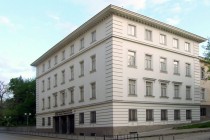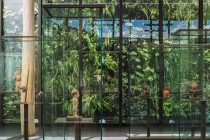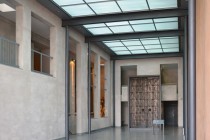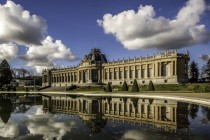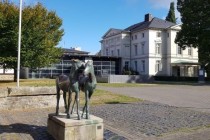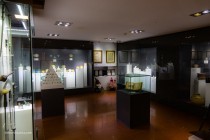



Hubei Provincial Museum was founded in 1953.
The most valuable museum exhibits include artifacts from the tombs of the Marquis Yi of the Zeng state (including the Goujian sword and bronze bell set), Chu, Han, Liangzhuangwang and Yingjingwang, as well as fossils of human skulls from Yunxian Prefecture.
The collection consists of over 230,000 objects.
The total area of the museum is 50,000 square meters.
| Rank | Voting | Museum | Country | Location | Website | Type | More | |
|---|---|---|---|---|---|---|---|---|
| 353. | 244 | Hubei Provincial Museum | China | Wuhan | Archeology | More | ||
| 354. | 160 | Museum of Liverpool | United Kingdom | Liverpool | National, urban... - history | More | ||
|
The Museum of Liverpool opened in 2011 and its predecessor the Museum of Liverpool Life in 1993.
The Museum of Liverpool is part of the National Museums Liverpool. The Museum of Liverpool tells the story of the city and port. There are more than 6,000 objects on display at the museum. The museum building is 110 meters long, 60 meters wide and 26 meters high. The exhibition space in the building occupies 8,000 square meters. |
||||||||
| 355. | 242 | Guangdong Museum | China | Guangzhou | Art, cultural history,... ethnography, natural history, numismatics | More | ||
|
Guangdong Museum was founded in 1959.
Guangdong Museum collects: 1) Chinese art: - Ceramics: A large collection of pottery from various dynasties, including porcelain from the Tang, Song, Yuan, Ming and Qing dynasties, - Painting and calligraphy: Traditional Chinese paintings and calligraphy, both historical and contemporary, 2) Guangdong culture and history: - Historical Artifacts: Everyday objects, tools and artifacts that document the history and culture of the Guangdong region, - Ethnography: Objects related to ethnic minorities living in Guangdong province, 3) Natural history: - Fossils: Paleontological collections, including plant and animal fossils from various geological periods, - Zoological and botanical specimens: Collections related to the biodiversity of the region, 4) Arts and crafts and jewelry: - Artistic crafts: Objects made of wood, jade, metal and other materials, showing traditional craft techniques, - Jewelry and ornaments: Examples of traditional jewelry and ornaments from various historical periods, 5) Numismatics: - Coins and banknotes: Collections of coins and banknotes that illustrate China's financial and economic history. Guangdong Museum has approximately 166,000 exhibits in its collection. Of this number, approximately 13,000 exhibits are regularly exhibited in various museum exhibitions, both permanent and temporary. Guangdong Museum covers an area of approximately 67,000 square meters. The exhibition area of Guangdong Museum is approximately 21,000 square meters. |
||||||||
| 356. | 110 | National Museum of Art, Osaka | Japan | Osaka | Contemporary art | More | ||
|
The National Museum of Art, Osaka (NMAO) is located on Nakanoshima island in central Osaka. It is celebrated for its unique subterranean architecture and its focus on post-war contemporary art.
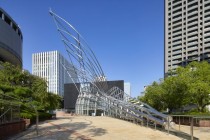
The museum originally opened on October 15, 1977, in Suita, using the Expo Museum of Fine Arts building from the 1970 World Exposition. Due to the aging of the original facility, it moved to its current location in Nakanoshima in November 2004. Designed by César Pelli, the museum is almost entirely underground. The above-ground entrance features a striking stainless steel and glass structure inspired by the "supple vitality of bamboo". The collection comprises approximately 8,300 works. The museum primarily collects contemporary art from Japan and abroad produced since 1945. Notable artists in the collection include Pablo Picasso, Paul Cézanne, Andy Warhol, Yayoi Kusama, and Tadanori Yokoo. The facility features three underground levels, with galleries on the second and third basement floors. The total floor area of the museum is approximately 13,500 square meters. Photography by Block Photograph./Shota Fukami |
||||||||
| 357. | 295 | City of Prague Museum | Czech | Prague | Urban - history,... art | More | ||
|
The City of Prague Museum officially opened to the public in 1883.
The collection is dedicated to the history of the city of Prague. The museum has 14 branches located throughout the city. |
||||||||
| 358. | 290 | Kunstmuseum Basel | Switzerland | Basel | Art | More | ||
|
Now operating under the name of Kunstmuseum Basel, it opened its collections for the first time in 1671.
The museum there is in 3 locations: Hauptbau (1936), Neubau (2016), Gegenwart (1980). The Kunstmuseum Basel has, among others, the largest collection of paintings by the Holbein family in the world, works by Martin Schongauer, Matthias Grünewald, Arnold Böcklin, Ferdinand Hodler, Claude Monet, Camille Pissarro, Vincent van Gogh, Pablo Picasso, Georges Braque, Fernand Léger, Paul Klee, Oskar Kokoschka, Mark Rothko, Andy Warhol, Jasper Johns, Frank Stella, Joseph Beuys, Gerhard Richter, Gabriel Orozco. The entire collection covers the last 700 years of art history. The collection includes approximately 4,000 paintings, sculptures, installations and videos, as well as 300,000 drawings and graphics. Kunstmuseum Basel, Hauptbau Herbst 2014 Julian Salinas |
||||||||
| 359. | 242 | Canterbury Museum | New Zealand | Christchurch | Natural history,... history, cultural history | More | ||
|
Canterbury Museum was established in 1867. It officially opened to the public on 3 December 1870.
Some key collections include: 1. Māori and Pacific Collections - Taonga (treasures) from Ngāi Tahu and other iwi (tribes) - Waka (canoes), korowai (cloaks), and whakairo (carvings) - Artifacts from various Pacific cultures 2. Antarctic Exploration - Items from the expeditions of Robert Falcon Scott and Ernest Shackleton - Equipment, clothing, and documents from early Antarctic explorers 3. Natural History - New Zealand’s unique flora and fauna, including moa skeletons - Geological specimens, fossils, and minerals 4. Early Canterbury and Colonial History - Artifacts from European settlers, including furniture, clothing, and tools - Early photography collections and paintings 5. Asian and Egyptian Collections - Chinese and Japanese artifacts, including ceramics and textiles - A small but significant Egyptian collection, including a mummy 6. Costume and Textile Collection - Historic clothing, including 19th and 20th-century fashion - Wedding dresses, military uniforms, and accessories 7. Decorative Arts and Social History - Ceramics, glassware, and furniture from different time periods - Items reflecting daily life in New Zealand’s history 8. Military History - New Zealand’s involvement in World War I and II - Medals, weapons, and personal belongings of soldiers 9. Transport and Technology - Vintage bicycles, cars, and other forms of transport - Scientific instruments and early communication devices 10. Archive and Manuscript Collections - Maps, letters, and documents related to Canterbury’s history - Photographs and oral histories As of 2020, museum housed over 2 million objects in its collection. The museum encompassed approximately 6,500 square meters of floor space. The museum is currently undergoing a significant redevelopment, which includes plans for 6,500 square meters of new exhibition and display space, increasing the total exhibition area by 50%. Upon completion, the museum will feature a total of approximately 9,750 square meters dedicated to exhibitions. |
||||||||
| 360. | 258 | Madame Tussauds | United Arab Emirates | Dubai | Wax museum | More | ||
|
Madame Tussauds was founded by Marie Tussaud, a French artist specializing in wax sculpture. The official opening of the museum's first permanent exhibition took place in London in 1835.
Madame Tussauds has many branches around the world. Current locations: America: Hollywood, Las Vegas, Nashville, New York, Orlando Europe: Amsterdam, Berlin, Blackpool, Budapest, Istanbul, London, Prague, Vienna Asia: Beijing, Chongqing, Hong Kong, Shanghai, Singapore, Tokyo, Wuhan Middle East: Dubai Australia: Sydney Madame Tussauds is known for its collections of wax figures that depict famous people from various walks of life. The collection includes: 1. Movie and music stars: Figures of famous actors, musicians and singers. There are figures of stars such as Marilyn Monroe and Elvis Presley. 2. Historical and political figures: Figures depicting famous historical figures such as Mahatma Gandhi, Winston Churchill and Martin Luther King Jr., as well as contemporary politicians such as Xi Jinping, Donald Trump, Emmanuel Macron, 3. Athletes: Famous personalities from the world of sports, such as Usain Bolt, Cristiano Ronaldo, or Muhammad Ali. 4. Pop culture and fiction characters: Characters from movies, comics and literature, such as Spider-Man, James Bond and heroes from Marvel and Star Wars films. 5. Scientists and inventors: Figures depicting famous scientists and inventors such as Albert Einstein, Nikola Tesla and Isaac Newton. 6. Members of the Royal Family: Figures representing the British royal family, including King Charles III, Prince William, Duchess Kate and others. Madame Tussauds' collections are regularly updated to reflect current events and changing trends in popular culture. The museum also has interactive exhibitions that allow visitors to get to know and interact with the figures better. It is estimated that there are several thousand wax figures in the global Madame Tussauds network. As for the number of exhibits on display, each museum usually has from several dozen to several hundred wax figures on display at any given time. For example, the main location in London usually has around 250-300 figures on display. Madame Tussauds' main location in London covers approximately 5,500 square meters. The exhibition area in London is approximately 2,000-3,000 square meters. |
||||||||
| 361. | 7804 | Borneo Cultures Museum | Malaysia | Kuching | History, archeology,... ethnography, natural heritage | More | ||
|
The building of the Borneo Cultures Museum (BCM) is the biggest development project in the history of the Sarawak Museum since it was established in 1891. The BCM, opened in 2022 is the first museum in Malaysia to be certified as a Green Building under the Green Building Index (GBI). The five-storey building consists of climate controlled permanent and temporary exhibitions spaces, Children's Gallery, function room, auditorium, restaurant, and a souvenir shop.
There is also an Arts and Crafts Gallery which includes activity labs and a dance studio. In the theme-based permanent exhibitions, the BCM offers immersive and interactive experiences for visitors using audio-visual technology and interactive displays. The usage of modern technology in the BCM enhances the artefacts display and supports the storyline of the exhibition. The thematic galleries at the BCM are as follows: At Level 2, the Children’s Gallery offers a distinct experience that is specifically targeted to primary school children. In the ‘Love Our Rivers’ gallery, children go on an adventure with the River Guardians to learn about the rivers of Sarawak and how to keep them clean. At Level 3, in the ‘In Harmony with Nature’ gallery, visitors encounter the cultures of the people who live in the coastal, rainforest and highland regions of Sarawak. Visitors can listen to stories, see zoological specimens and immerse themselves in the rich biodiverse environments. At Level 4, in the ‘Time Changes’ gallery, visitors travel through time to explore the development and evolution of human settlements in Sarawak since the Paleolithic period. This level features archaeological and historical artefacts, and covers the significant events that shaped the history of Sarawak. At Level 5, the ‘Objects of Desire’ gallery showcases the beauty of the artefacts. The gallery features the best examples of material culture from the collections of the Sarawak Museum. This gallery allows visitors to explore the uniqueness and value of these objects to the local communities of Sarawak. |
||||||||
| 362. | 146 | The "Wieliczka" Salt Mine | Poland | Wieliczka | Mining | More | ||
|
The "Wieliczka" Salt Mine is one of the oldest rock salt mines in the world. The "Wieliczka" Salt Mine has more than 7 centuries of exploitation of the salt deposit, 2,391 chambers and 245 km of galleries, 9 main levels at a depth of 57 to 327 meters.
In the "Wieliczka" Salt Mine, on the 3rd level, at a depth of 135 meters, there is the Cracow Saltworks Museum in Wieliczka. The Cracow Saltworks Museum founded in 1951, apart from the underground part, also has a second part on the surface in the medieval Saltworks Castle. The museum presents the history of the mine, tools and devices used to extract and transport salt, and the history of the city of Wieliczka. The museum's collection consists of about 20,000 exhibits. |
||||||||
| 363. | 621 | China Aviation Museum | China | Beijing | Aviation | More | ||
|
The China Aviation Museum was established in 1989.
The China Aviation Museum in Beijing hosts one of the world’s most extensive aviation collections, curated across three major exhibition areas: the Cavern Exhibition Hall, the Integrated (Masterpiece) Hall, and the Open‑Air Exhibition Area. The museum boasts over 200–300 aircraft, plus a vast array of missiles, radars, engines, artifacts, and archival items. 1. Cavern Exhibition Hall - Set in a former underground bunker carved into Datangshan Mountain (~586 m long). - Features a historical display of aviation development from early flight to modern jets. - Highlights include early Chinese prototypes like the Feng Ru II, Beijing‑1, and Soviet-era types (e.g. La‑9, La‑11, Tu‑2, Yak‑17) alongside models from global aviation. 2. Integrated Hall - A two-floor building showcasing aviation milestones and key figures from the PLA Air Force. - Displays include historic fighter planes and tribute installations to military aviation heroes. 3. Open‑Air Exhibition Area - Outdoor display spanning around 40,000 m², showcasing civilian and military aircraft, air defense systems, and radar installations. - Noteworthy exhibits: • Mao Zedong’s personal Ilyushin Il‑14 VIP transport—visible both inside and out. • Historic aircraft: C‑46, Li‑2, Trident, Y‑7, Airbus A310‑200, and more. • Weaponry exhibits: surface‑to‑air missiles (e.g., Chinese HQ‑2), anti‑aircraft guns, bombs, parachutes, cameras. Additional Highlights - Global selection of over 200 military aircraft from countries like the U.S., Soviet Union, Japan, and the Czech Republic. - Unique machines: early models like the Mosquito bomber, P‑51 Mustang, P‑61 Black Widow, MiG‑15/17/23, Shenyang J series, and rare drones like the Lockheed D‑21. - Also houses aircraft engines (both piston and jet), avionics equipment, flight gear, engine cut‑aways, and scientific exhibits including wind tunnels and educational materials. - Over 2,468 missiles/radars, 10,000 aviation relics, 20,000+ technical documents, and over 1,000 international gifts. |
||||||||
| 364. | 454 | Museum Siam | Thailand | Bangkok | History, Culture,... Thai way of life | More | ||
|
Museum Siam, Discovery Museum under the National Discovery Museum Institute (NDMI), is the first discovery museum that focuses on making visitors gain new experience while visiting a museum. Museum Siam is built as a model for a pleasurable learning center and raises the standard of new learning methods for Thai citizens, especially children and youth. It is the place to develop conscience in knowing themselves, neighbors, and the world. The creation of a “brand-new notion and image” of a museum in a learning society, through modern technology and creative activities, is to make learning histories and stories more interesting and enjoyable. The new learning is composed of Main Exhibition, Special Exhibitions, and Creative Learning Activities
|
||||||||
| 365. | 288 | Museu de Arte Sacra de São Paulo | Brazil | São Paulo - SP | Art, sacred art | More | ||
|
Museu de Arte Sacra de São Paulo (MAS-SP) is a public institution affiliated with the Government of the State of São Paulo, under the responsibility of the Secretariat of Culture, Economy, and Creative Industries. It was inaugurated in 1970.
Located in the city of São Paulo, the Museum occupies the Mosteiro da Luz, a convent belonging to the Order of the Conceptionist Sisters (Order of the Immaculate Conception - OIC), whose nuns live in seclusion. The Mosteiro da Luz was founded in 1774 by Frei Galvão (Frei Antônio de Sant’Anna Galvão, 1739–1822), the first Brazilian saint, whose remains are interred beneath the Monastery. Today, the Monastery stands as the only colonial building from the 18th century in São Paulo that has preserved its original materials, elements, and structure. It is an example of taipa (rammed earth) architecture. The MAS-SP houses one of the most important collections of sacred art in Brazil, assembled by the Archdiocesan Mitre throughout the 20th century. The collection includes pieces from historic churches across the country, sculptures of saints produced in Brazil and Europe between the 16th and 20th centuries, as well as silverware and paintings. Its holdings comprise religious sculptures from the colonial period and several masterpieces by prominent artists such as Aleijadinho, Frei Agostinho da Piedade, Frei Agostinho de Jesus, Mestre Valentim, Mestre Ataíde, Almeida Júnior, and Benedito Calixto. |
||||||||
| 366. | 250 | Hong Kong Heritage Museum | China | Hong Kong | History | More | ||
|
Hong Kong Heritage Museum opened in 2000.
It is dedicated to history, art and culture. It has 5 permanent exhibitions and 6 thematic temporary exhibitions. Exhibition area of 7,500 square meters. |
||||||||
| 367. | 355 | Kunsthaus Zürich | Switzerland | Zürich | Art | More | ||
|
The Kunsthaus Zürich traces its origins back to 1787, opened in 1910.
The Kunsthaus Zürich collection includes works of art from the 13th century to the present day. The collection includes works by, among others, Claude Monet, Edvard Munch, Pablo Picasso and the Swiss Ferdinand Hodler, Alberto Giacometti and the Dada movement. Kunsthaus Zürich has 11,500 square meters of exhibition space. Photo credit: © Franca Candrian, Kunsthaus Zürich |
||||||||
| 368. | 260 | Art Gallery of South Australia | Australia | Adelaide | Art | More | ||
|
The Art Gallery of South Australia (AGSA) was established in June 1881 as the National Gallery of South Australia. It officially opened to the public that same year.
The Art Gallery of South Australia holds one of the most significant art collections in Australia, with more than 47,000 works spanning a wide range of cultures, styles, and periods. Its collection highlights include: 1. Australian Art - Colonial to Contemporary: Paintings, sculpture, photography, and decorative arts from the early colonial period to contemporary works. - Indigenous Art: One of the most comprehensive collections of Aboriginal and Torres Strait Islander art, including bark paintings, dot paintings, sculpture, and contemporary Indigenous works. 2. European Art - Works from the Renaissance to the present day. - Key holdings include 19th-century British art, Victorian painting, and modernist European works. 3. Asian Art - Rich holdings from East Asia, South Asia, and Southeast Asia, including: • Chinese ceramics and jades. • Japanese prints and textiles. • Indian sculpture and miniature paintings. 4. Decorative Arts and Design - Extensive collection of decorative arts including ceramics, glass, furniture, metalwork, and textiles. - Includes Australian, European, and Asian design, from historical craftsmanship to modern design movements. 5. Contemporary Art - Strong focus on Australian contemporary art and international contemporary artists. - Includes installations, digital media, performance art, and cutting-edge visual works. 6. Photography and Prints - Significant holdings of Australian and international photography and prints. - Includes historical photographs, modernist works, and contemporary art photography. |
||||||||
| 369. | 169 | Baalbek | Lebanon | Baalbek | Archaeological site | More | ||
|
Baalbek Archaeological Site
1. Prehistoric Beginnings - Neolithic Period (~9000 BC): Archaeological evidence suggests that Baalbek was inhabited as early as the Neolithic period. Its location in the Beqaa Valley made it ideal for early human settlement due to fertile lands and access to water. - It likely began as a small agrarian community. 2. Canaanite and Phoenician Era - By the 3rd millennium BC, Baalbek was a prominent religious site for the Canaanites and later the Phoenicians. - It was dedicated to Baal, the storm and fertility god, and Astarte, the goddess of love and war. The name "Baalbek" means "Lord (Baal) of the Beqaa." - The site was home to temples and altars built for rituals to honor these deities. 3. Hellenistic Period (4th–1st Century BC) - After the conquests of Alexander the Great in the 4th century BC, Baalbek fell under Hellenistic influence and was renamed Heliopolis, meaning "City of the Sun." - Greek culture and religious practices mingled with local traditions, but Baalbek remained a significant religious center. 4. Roman Period (1st Century BC – 4th Century AD) - Baalbek reached its zenith during Roman rule. - Around the 1st century BC, the Romans began an ambitious construction project to build massive temples dedicated to their gods. The Temple of Jupiter: One of the largest religious structures in the Roman world. The Temple of Bacchus: A remarkably well-preserved and ornate temple. The Temple of Venus: A smaller but elegant temple. - Baalbek became a pilgrimage site and showcased Roman engineering and architectural grandeur. - The city was part of the Roman province of Syria and later the Byzantine Empire, continuing its religious importance. 5. Islamic Period (7th–13th Century CE) - Baalbek fell to the Muslim armies during the 7th century CE, under the Rashidun Caliphate. - Its religious role shifted, with some Roman temples converted into mosques or repurposed. - Under the Umayyads, Abbasids, and later Mamluks, Baalbek retained its significance as a regional center and was fortified against invaders. 6. Medieval Period - The Crusaders briefly occupied Baalbek during the 12th century but were unable to hold it for long. - The city returned to Muslim control and continued to flourish under the Mamluks, who added fortifications and other structures. 7. Ottoman Period (1516–1918) - Under Ottoman rule, Baalbek became a quieter provincial town. - Its ruins were rediscovered by European travelers during the 18th and 19th centuries, sparking archaeological interest. Here are the main monuments: 1. Temple of Jupiter Dedicated to Jupiter Heliopolitanus, the chief deity of the Roman pantheon. - This was the largest temple in the Roman world, with a massive podium and towering columns. Originally, it had 54 columns, each standing 20 meters high and 2.2 meters in diameter. Today, only 6 columns remain standing. - The sheer scale of this temple underscores its importance as a religious and political statement of Roman power. 2. Temple of Bacchus Dedicated to Bacchus, the god of wine, fertility, and revelry. - Often mistaken as the Temple of Jupiter due to its grandeur, the Temple of Bacchus is exceptionally well-preserved. - It features richly decorated friezes and reliefs depicting vines, mythical creatures, and Roman deities. - The temple measures approximately 69 meters in length and 36 meters in width, with 42 columns, each 19 meters tall. 3. Temple of Venus Dedicated to Venus, the goddess of love and beauty. - A smaller but elegantly designed temple, known for its curvilinear and circular shape, which contrasts with the more rectilinear designs of the other temples. - The temple stands apart from the main complex and exhibits unique features of Roman decorative styles. 4. The Great Court Served as the grand entrance to the Temple of Jupiter and a gathering space for worshipers. - The court measures about 135 meters by 113 meters and features altars, pools, and smaller structures used for rituals. - Its layout includes a hexagonal forecourt, surrounded by columns and flanked by staircases leading to the temples. - 5. The Hexagonal Court - Transitional space between the Great Court and the Temple of Jupiter. - This court is unique in its hexagonal shape, surrounded by a colonnade. - It was used for ceremonies and as a preparatory area for pilgrims approaching the temples. 6. Propylaea (Monumental Entrance) The grand gateway leading into the temple complex. - Features a wide staircase and a colonnaded structure, creating a dramatic approach to the temples. - The Propylaea was a symbol of the grandeur and sanctity of the site. 7. Stone of the Pregnant Woman (Hajar al-Hibla) An unfinished monolith lying in a nearby quarry. - This is one of the largest monolithic stones ever quarried, estimated to weigh over 1,000 tons. - Its purpose remains debated, but it is believed to have been intended for the Temple of Jupiter. 8. Other Features - Roman Columns: Scattered across the site, these towering structures showcase the intricate craftsmanship of Roman engineers. - Underground Passages: Likely used for rituals or as service areas for temple activities. - Byzantine and Islamic Additions: Later modifications include a Christian basilica and Islamic fortifications. The Baalbek archaeological site occupies a total area of approximately 5 hectares (about 12 acres). Here are the key museums that showcase Baalbek's treasures: 1. Baalbek Museum - Displays artifacts excavated from the site, including statues, inscriptions, reliefs, and architectural elements. - Items date from the Phoenician, Hellenistic, Roman, Byzantine, and Islamic periods. - Provides visitors with context about the site's history and significance. 2. National Museum of Beirut - One of the most important museums in Lebanon, it houses a rich collection of artifacts from across the country, including items from Baalbek. - Exhibits include Roman-era statues, mosaics, and inscriptions, many of which were discovered at Baalbek. - The museum's collection also features sarcophagi and other items that illustrate daily life and religious practices in ancient Baalbek. 3. American University of Beirut (AUB) Archaeological Museum - Houses a collection of artifacts from various archaeological sites in Lebanon, including Baalbek. - Items include pottery, tools, and small objects that reflect the daily lives of Baalbek's ancient inhabitants. 4. Louvre Museum - The Louvre has a significant collection of artifacts from the Levant, including items from Baalbek. - Objects include reliefs, sculptures, and inscriptions brought to Europe during 19th and early 20th-century excavations. 5. British Museum - Features a collection of items from Lebanon and the wider Levant, including materials linked to Baalbek. - Displays include Roman sculptures, inscriptions, and other artifacts acquired during archaeological missions in the region. 6. Pergamon Museum - Known for its collection of ancient artifacts from the Near East, it includes items related to Roman and Hellenistic Baalbek. - Architectural fragments and reliefs may be tied to Baalbek's influence in the region. 7. Local Museums in Lebanon - Other smaller museums in Lebanon, such as the Museum of Lebanese Prehistory (Saint Joseph University, Beirut), may also house artifacts from Baalbek or provide insights into the region’s broader archaeological context. |
||||||||
| 370. | 305 | Signal Hill | Canada | St. John's | National Historic... Site | More | ||
|
Signal Hill was designated a National Historic Site in 1951.
The site has played an important role in Canada's defense and communications history. At Signal Hill on December 12, 1901, Guglielmo Marconi received the first transatlantic wireless transmission. Included in St. John's Signal Hill National Historic Site includes Cabot Tower and the Visitor Center. |
||||||||
| 371. | 241 | Singapore Art Museum | Singapore | Singapore | Contemporary art | More | ||
|
The Singapore Art Museum (SAM) opened in 1996.
SAM presents contemporary art from a Southeast Asian perspective while covering the broader Asian region such as China, India, Korea and Japan. The museum's collection includes works by artists such as Suzann Victor, Dinh Q. Lê, Nge Lay. SAM presents contemporary art in 20 locations across Singapore, including Tanjong Pagar Distripark. SAM has been organizing the Singapore Biennale since 2006. |
||||||||
| 372. | 347 | The Institute for Southern Thai Studies, Thaksin University | Thailand | Songkhla | Folklore Museum | More | ||
|
The Institute for Southern Thai Studies, Thaksin University is located in Moo 1, Baan Ao Sai, KohYor Sub-District, near the second part of Tinsulanonda Bridge. It was established in 1978 to be an art and culture learning centerfor thef southern region. Its total area is 23 rai. The buildings are in a southern architectural style. The institute is divided into 4 buildings, and each building is divided into various rooms to exhibit history, ethnicity, ancient objects from local wisdom, weapons used in the southern region such as daggers, dagger-sharped knives, RawiAyams, local weaving clothes such as "Pha or PumRiang" and "Pha Tor Pattani", various patterns of rare coconut graters, local plays such as "Nang Talung", "Norah", and "Likaypha", local games and toys such as "SudRao", kite, and top, ordain ceremony, and traditional aid. The institute provides accommodations for visitors, seminar rooms, and traditional product shops, including Krajood handicraft, Panan handicraft, Yan Lipao handicraft, KohYor weaving clothes, products from shells and coconut shells, and silverware. The institute received the best cultural tourist attraction from the Thailand Tourism Authority in 2000. From the viewpoint of the institute, you can see the beautiful scenery of Songkhla Lake. The institute was established when Academic Education College opened the new southern campus in Songkhla Province in 1968. The collegians at that time studied Thai as one of their minor subjects and collected data for studying folkloristics. As a result, they got a lot of cultural information, including real objects, Thai Uricaceae books, and oral literature. This valuable data was collected systematically with the target and became the "Local Southern Literature Room" and "Southern Region Language and Cultural Center" on November 14, 1975. In the same year, the center received the annual government statement of expenditure to build the buildings for Thai Studies and the Southern Region Language and Cultural Center for 4,589,200 baht. The buildings were built in the area of Srinakharinwirot University, Songkhla Campus. The construction was completed in 1978. King Bhumibol, Queen Sirikit, and Princess Sirindhorn came to open the buildings on September 13, 1979. Later, the Ministry of University Affairs agreed to promote the center as "the Institute for Southern Thai Studies."
|
||||||||
| 373. | 393 | Museum of the History of Barcelona | Spain | Barcelona | Urban - history | More | ||
|
The Museum of the History of Barcelona (MUHBA) opened in 1943.
MUHBA deals with the urban life of the city from its beginnings to the present day, i.e. over the last 2000 years. The MUHBA on site: MUHBA Casa Padellàs - House of the History of Barcelona MUHBA Plaça de Rei MUHBA Temple of Augustus The Door of the Sea and the Dockside Thermal Baths MUHBA Roman funeral Way MUHBA The Domus Avignon MUHBA The Domus of Sant Honorat MUHBA El Call MUHBA Santa Caterina MUHBA Oliva Artés MUHBA Good Shepherd MUHBA Fabra and Coats MUHBA House of Water MUHBA Vil. la Joana MUHBA Park Güell MUHBA Shelter 307 MUHBA Turó de la Rovira MUHBA Collections Center |
||||||||
| 374. | 479 | Al Shindagha Museum | United Arab Emirates | Dubai | Open-air heritage | More | ||
|
The Al Shindagha Museum is a heritage museum located in the historic Al Shindagha district, one of the city's oldest neighborhoods. It was developed as part of Dubai’s broader initiative to preserve its cultural heritage and showcase the emirate’s transformation over time.
History of Its Construction: 1. Origins and Restoration Efforts - The museum is housed in restored buildings that date back to the 19th century when Al Shindagha was home to Dubai’s ruling family. - The area was historically a center of trade and governance, with traditional wind-tower houses that were vital for cooling in the hot desert climate. - Dubai’s government initiated large-scale restoration projects to preserve this historic district, and many of the old houses were converted into museum spaces. 2. Opening and Development - The Al Shindagha Museum officially opened in 2019 as part of Dubai’s heritage conservation efforts. - It was developed under the Dubai Culture & Arts Authority, in collaboration with Dubai Municipality and the Department of Tourism. - The project aimed to create a cultural and historical hub showcasing Dubai’s history, traditions, and maritime heritage. 3. Museum Features - The museum consists of several pavilions and exhibitions, with the main attraction being the “Dubai Creek: Birth of a City” exhibit, which tells the story of Dubai’s evolution. - Other sections include exhibits on traditional crafts, pearl diving, trade, and Bedouin life, offering an immersive experience through multimedia displays and artifacts. Main Buildings & Sections of Al Shindagha Museum: 1. Sheikh Saeed Al Maktoum House - One of the most important buildings in the complex, this was the residence of Sheikh Saeed Al Maktoum, the ruler of Dubai from 1912 to 1958. - It showcases historical photographs, documents, and artifacts related to Dubai’s ruling family and political history. 2. Dubai Creek: Birth of a City - This pavilion tells the story of Dubai Creek and its role in shaping the city’s trade, economy, and development. - It features interactive exhibits on pearl diving, maritime trade, and early settlements. 3. Perfume House - This section highlights the traditional art of Emirati perfumery, including the significance of oud, incense (bukhoor), and essential oils in Emirati culture. - Visitors can explore traditional perfume-making techniques and ingredients. 4. Emerging City - Focuses on Dubai’s transformation from a small fishing and trading village to a global metropolis. - Includes exhibits on urban planning, infrastructure, and architectural developments. 5. Traditional Crafts House - Showcases Emirati craftsmanship, including textile weaving, pottery, and metalwork. - Demonstrates how traditional skills have been passed down through generations. 6. Children’s Pavilion - A dedicated space for younger visitors to engage with Emirati history and culture through interactive and educational exhibits. 7. Traditional Jewellery House - Displays historical Emirati jewelry, showcasing intricate designs and the significance of gold, silver, and gemstones in local traditions. 8. Culture of the Sea Pavilion - Focuses on the maritime heritage of the UAE, including pearl diving, fishing, and dhow (traditional boat) building. 9. Story of the Creek Pavilion - Highlights the importance of Dubai Creek in trade, migration, and the city's early economic development. The Al Shindagha Museum is situated within the Al Shindagha Historic district in Dubai, a neighborhood covering approximately 0.26 square kilometers (260,000 square meters). Within this district, the museum complex itself comprises 22 pavilions housed within over 80 historic buildings. |
||||||||
| 375. | 274 | National Historical Museum | Bulgaria | Sofia | National - history,... archeology, art, ethnography | More | ||
|
The National Historical Museum (Национален исторически музей) in Sofia, Bulgaria is the country’s largest and one of the richest history museums in the Balkans. It was established on 5 May 1973 and since 2003 has been housed in a former government residence at the foot of Vitosha Mountain in the Boyana district.
The museum’s vast collection comprises over 650,000 historical, archeological, ethnographic and artistic objects spanning from prehistory to the present day, though only about 10 % are on permanent display. Highlights include iconic artifacts such as the Panagyurishte Golden Treasure and other Thracian treasures, as well as extensive exhibits on medieval Bulgaria, the Ottoman period, national revival, and the modern Bulgarian state. |
||||||||
| 376. | 431 | National Museum of the Islamic Revolution & Holy Defense | Iran | Tehran | Military | More | ||
|
National Museum of the Islamic Revolution and Holy Defense revolves around a series of concepts from the beginning of Iran's history until present times; the first hall is exclusively about the Islamic revolution and the next six ones are related to the Holy Defense (Iran-Iraq war 1980-1988). Through the use of visual and conceptual media, these halls display the chronology of developments in Iran and present a totally new definition of the concept of museums.
|
||||||||
| 377. | 234 | Palmyra | Syria | Palmyra | Archaeological site | More | ||
|
Palmyra, the ancient city, began to develop and become important in the Bronze Age, around the second millennium BC. Palmyra was an important trading center on the caravan route that connected Persia with the Mediterranean coast. The city reached the peak of its development during the Roman period, especially in the 2nd and 3rd centuries AD.
Main monuments of Palmyra (ruins, severely damaged in 2015-2017): 1. Temple of Bel 2. Arc de Triomphe 3. Colonnade (over a kilometer long colonnade was the main artery of the city, it consisted of a series of Corinthian columns that led from the Temple of Bel in the east to the Funeral Temple No. 86 in the western part of the city) 4. Roman Theater 5. Agora (the city's central commercial and administrative square) 6. Temple of Baalshamin 7. Tower Tombs (Valley of Tombs) 8. Diocletian's Camp 9. Tetrapylon (consisted of four groups of four columns) 10. Temple of Al-Lat The archaeological site of Palmyra covers over 1,640 hectares. Antiquities from Palmyra are presented in many museums around the world, including: 1. National Museum in Damascus 2. Palmyra Museum (closed since 2015) 3. Louvre 4. British Museum 5. Vatican Museums 6. Pergamonmuseum 7. Metropolitan Museum of Art 8. Museum of Islamic Art (MIA), Qatar Museums |
||||||||
| 378. | 588 | Pfahlbauten Unteruhldingen | Germany | Uhldingen-Mühlhofen | Open Air Archaeological... Museum | More | ||
|
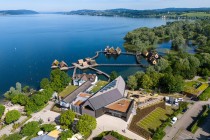
The Pfahlbauten Unteruhldingen (Pile Dwellings Unteruhldingen) are Germany's oldest open-air archaeological museum. A journey through 10,000 years of history awaits you. After visiting the newly opened museum hall with its original finds, you'll enter the multimedia show ARCHAEORAMA, where you'll take a virtual dive into the pile dwellings in Lake Constance. You'll then be taken to the villages from the Stone and Bronze Ages, always with a magnificent lake panorama. Here, past periods of human history and different ways of life spanning three millennia come to life. The tour continues with the Stone Age Trail and Pile Dwelling Cinema, where experimental archaeologists introduce the house-building techniques of that time. At the end of the tour, you'll discover the first two pile dwellings from 1922, featuring a special exhibition on the museum's beginnings—or you can deepen your knowledge of the pile dwellers on the upper floor of the museum hall.
© Archiv PM/Achim Mende |
||||||||
| 379. | 153 | Omaka Aviation Heritage Centre | New Zealand | Blenheim | Aviation | More | ||
|
Omaka Aviation Heritage Center was opened in 2006.
A collection of planes from World War I and II, e.g. - Curtiss Models F Flying Boat - Airco DH.4 - Thomas-Morse S-4 "Tommy Scout" - Messerschmitt Bf 108 - Lockheed Hudson - de Havilland DH.98 "Mosquito" - Curtiss P-40N Kittyhawk "Gloria Lyons" - Supermarine Spitfire Mark XIV (Griffon-powered variants) - Focke-Wulf Fw 190 as well as military uniforms, logbooks, photos, letters. |
||||||||
| 380. | 218 | Archaeological Museum in Zagreb | Croatia | Zagreb | National - archeology | More | ||
|
The Archaeological Museum in Zagreb traces its origins to the National Museum that began public activity in 1846. Its archaeological department became independent over time, and since 1940 the Archaeological Museum has operated as a standalone institution. It has been housed in the Vranyczany-Hafner Palace on Zrinski Square since 1945.
The museum’s holdings include over 450,000 archaeological artefacts from various periods, mostly from Croatian territory but also significant foreign material. Major collections include: - Prehistoric artefacts - Egyptian collection (one of the few in the region) with about 600 objects on permanent display - Classical Greek and Roman collections - Medieval pieces - Numismatic (coins and medals) collection, one of the largest in Europe Famous objects include the Vučedol Dove, the Liber Linteus Zagrabiensis (Etruscan linen book), and the Zagreb Mummy. The current building has been reported to have a total area of about 5 100 m² after recent renovations. |
||||||||
| 381. | 354 | Miniatur Wunderland | Germany | Hamburg | Miniature | More | ||
|
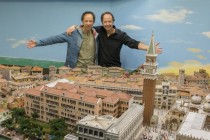
Miniatur Wunderland the world's largest model railway was founded in 2000.
Miniatur Wunderland depicts a variety of scenes and landscapes from around the world, including cities, ports and airports. Rented space 10,000 square meters. Layout size 1.610 square meters. 1.166 trains. Track Length 16,491 meters. 10,330 cars. 52 planes. 4,669 buildings. 289,410 figures. Photo: Miniatur Wunderland Hamburg |
||||||||
| 382. | 247 | Jewish Museum Vienna | Austria | Vienna | Culture History | More | ||
|
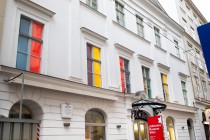
The Jewish Museum of the City of Vienna is a place of encounter, interaction and understanding, which seeks to raise awareness of Jewish history, religion, and culture.
The first Jewish museum in the world was founded in Vienna in 1895, sponsored by a group of Viennese Jewish citizens. The collection focused on the culture and history of the Jews in the Austro-Hungarian Empire, particularly Vienna and Galicia. In the interwar years Zionist objects were added, reflecting the new political discussion at that time. The museum was closed by the Nazis in 1938 directly after the Anschluss. In the last year of its existence the inventory listed 6,474 objects. In 1939 the museum collection was transferred to the Museum of Ethnology and other institutions in Vienna. The Anthropology Department of the Natural History Museum in Vienna used some of the items for its anti-Semitic propaganda exhibition “The physical and psychological appearance of the Jews". Most of the objects were returned to the IKG Vienna in the early 1950s, although some were not restituted until the 1990s. Over half of the objects have disappeared; it is practically impossible to discover whether they were stolen or deliberately destroyed. Objects once listed in the Jewish Museum collection turn up occasionally on the art and antiques market. The surviving objects – on permanent loan from the IKG to the present-day Jewish Museum Vienna – form a unique component of the current collection. |
||||||||
| 383. | 194 | Central State Museum of the Republic of Kazakhstan | Kazakhstan | Almaty | National - history,... archeology, paleontology, anthropology, ethnography, contemporary culture and politics | More | ||
|
The Central State Museum of the Republic of Kazakhstan is one of the oldest and largest museums in the country and in Central Asia, with a collection of around 300,000 artifacts that illustrate Kazakhstan’s history from prehistoric times to the present day.
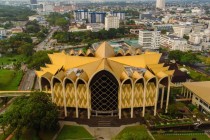
The museum was formally established in 1931 and originally housed in the former cathedral in Almaty. In 1985 it moved to its modern purpose-built building, known for its distinctive architecture. Exhibits include paleontological finds, archaeological treasures (including ancient gold artifacts), ethnographic displays of traditional Kazakh life, historical documents and photographs, and galleries on modern Kazakhstan. |
||||||||
| 384. | 123 | Benaki Museum | Greece | Athens | Archeology, art,... history, ethnography | More | ||
|
The Benaki Museum (Μουσείο Μπενάκη) was established in 1930. It was officially opened to the public on 22 April 1931.
The Benaki Museum is actually a complex of 10 thematic museums: Museum of Greek Culture, Pireos 138, Museum of Islamic Art, Ghika Gallery, Yannis Pappas Studio, Toy Museum, Leigh Fermor House, ‘NEMA’, Valadoros Collection, Delta House. Major Collections 1. Greek Culture / Greek Art & Material Culture - A panorama of the Greek world “from Prehistory to the Modern State (ca 1940)”. - Includes: • Prehistoric, Ancient Greek and Roman antiquities: Neolithic tools/figurines, Cycladic vases, Mycenaean jewellery & vases. • Byzantine and post-Byzantine art: manuscripts, icons, ecclesiastical vessels, jewellery, church furnishings. • The modern Greek period: clothing, furniture, decorative objects, national costumes from 17th-19th c onward. - More than 40,000 items in the Greek culture collection. 2. Paintings, Drawings & Prints - The museum holds nearly 6,000 works (European artists 17th-19th c + Greek artists 19th-20th c). - These sit alongside material culture items, bridging “fine art” and everyday/ceremonial material. 3. Childhood, Toys & Games - A distinctive and somewhat less typical collection: toys, games, childhood-objects from antiquity to the 1970s, from Greece and beyond. 4. Coptic Art - Objects from the Coptic period of Egypt: textiles, metalwork, wood-carvings. 5. Chinese & Far East Art - The museum includes a collection of Chinese works (ceramics, bronzes, decorative arts) spanning from the 3rd millennium BC to the 19th century. 6. Islamic Art - One of its standout collections globally. More than 8,000 works covering the evolution of Islamic art (7th-19th c) from regions including Persia, Arabia, North Africa, India. - Objects such as ceramics, metalwork, textiles, glass, weaponry and a reception-room interior from 17th-c Cairo. The museum houses more than 100,000 objects overall. Exhibition area: 1000 m². |
||||||||
| 385. | 596 | Swiss National Museum | Switzerland | Zürich | National – cultural... history, craftsmanship, artworks | More | ||
|
The Swiss National Museum was officially inaugurated on 25 June 1898.
The Swiss National Museum consists of: National Museum Zurich, Forum of Swiss History Schwyz, Château de Prangins, Collection Centre. The Swiss National Museum houses an extensive and diverse collection that spans Switzerland's cultural history from prehistoric times to the present day. With over 870,000 objects, the museum's holdings are organized into 14 distinct collection groups, each offering unique insights into various aspects of Swiss heritage. Key Collection Groups: - Archaeology: Artifacts from the Palaeolithic Age to the early Middle Ages, including significant prehistoric tools and Bronze Age items. - Silver and Non-Ferrous Metals: Sacral and secular goldwork objects from the 12th to the 21st century. - Graphic Arts, Photographs, Illuminated Manuscripts & Facsimiles: Drawings, graphic reproductions, illuminations, manuscripts, facsimiles, and historic photographs. - Ceramics & Glass: Medieval ceramic vessels, dishes made and used in Switzerland, figurines, sculptures, and reliefs. - Carriages, Sledges & Wagons: Representative examples of various carriages, magnificent sledges from different periods, and typical agricultural wagons. - Painting & Sculpture: Paintings emphasizing ecclesiastical and historical art, portraiture, and the world's largest collection of stained glass. - Furniture & Interiors: A comprehensive array of Swiss-designed and produced furniture, representing the largest public furniture collection in Switzerland. - Numismatics & Seals: Coins, medals, banknotes, securities, credit cards, coin-minting dies, and the most important collection of seals in Switzerland. - Jewellery & Timepieces: Jewellery from the 18th to 21st centuries and a representative cross-section of clockmaking over the last 500 years. - Special Collections: Toys, musical instruments (with a focus on military music), customs-related items, baking moulds, tin figures/casting moulds, and the Hallwil Collection. - Technology & Traditions: Objects from everyday life, crafts and trades, workshop equipment, computers, electrical devices, communication means, and measuring instruments. - Textiles & Fashion: Fabrics, clothing, accessories, traditional costumes, church paraments, and flags, including the most comprehensive textile collection in Switzerland. - Weaponry & Uniforms: Switzerland's most significant collection of weaponry from the High Middle Ages to the mid-20th century, along with uniforms, headgear, equipment, and decorations. - Witnesses to History: Artifacts reflecting social, political, economic, and cultural events shaping Switzerland from 1945 to the present day. The Swiss National Museum offers a total area exceeding 9,400 square meters. |
||||||||
| 386. | 212 | Fondazione Palazzo Strozzi | Italy | Florence | Art | More | ||
|
Since 2006, the Fondazione Palazzo Strozzi (Foundation of the Palazzo Strozzi) has managed Palazzo Strozzi, a Renaissance private palace built between 1489 and 1538.
Palazzo Strozzi is the largest exhibition space for temporary exhibitions in Florence. Fondazione Palazzo Strozzi organizes several exhibitions every year dedicated to different aspects of art, creating a dialogue between the old and the new. |
||||||||
| 387. | 277 | Multimedia Art Museum, Moscow | Russia | Moscow | Contemporary art | More | ||
|
The Multimedia Art Museum, Moscow (MAMM) began in 1996 as the Moscow House of Photography.
MAMM is a state institution that specializes in contemporary art (graphics, drawings and posters) and new media, including photography, video art, and other multimedia forms. Its collection includes works by artists such as Alexander Rodchenko. The total number of exhibits is approximately 90,000. MAMM covers an area of approximately 9,000 square meters, of which approximately 3,000 square meters are devoted to exhibitions. |
||||||||
| 388. | 550 | National Museum of Art, Architecture and Design | Norway | Oslo | National - art,... architecture, design | More | ||
|
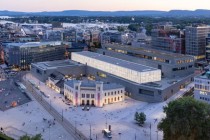
The National Museum of Art, Architecture and Design (National Museum, Nasjonalmuseet, NaM) was established in 1837 as the National Museum. The new National Museum of Art, Architecture and Design opened in 2022 (https://www.museumworldranking.net/news/the-national-museum-of-norway-announces-forthcoming-exhibition-programme-following-anticipated-opening-in-june-2022,125).
The National Museum of Art, Architecture and Design consists of: - National Museum (collection of Norwegian Romantic Nationalism paintings, collection of works by Edvard Munch with the first version of "The Scream" from 1893, collection of graphics and drawings with works by, among others, Durer, Rafael, Rubens, Rembrandt, Van Gogh) - National Museum - Architecture (collection consisting of over 300,000 architectural drawings, models, photographic documentation from the period from the 1830s to the present day) - Villa Stenersen (an example of Norwegian functionalism designed in 1937-1939) The entire collection includes 400,000 objects. The total area is over 54,600 square meters, of which 10,000 square meters is the exhibition area. Photo: Iwan Baan |
||||||||
| 389. | 239 | National Museum of Anthropology | Spain | Madrid | Anthropology, archeology,... ethnography | More | ||
|
The National Museum of Anthropology (Museo Nacional de Antropología) is a pioneering institution dedicated to cultural diversity and social anthropology. It is one of the oldest anthropological museums in Spain, known for its extensive, globally sourced collections presented in a 19th-century building.
The museum was founded through the personal initiative of Segovian physician Dr. Pedro González Velasco and inaugurated by King Alfonso XII on April 29, 1875, originally as the Anatomical or Anthropological Museum. The museum houses items representing the tangible culture of societies from Africa, America, Asia, Europe, and Oceania. Key collections include ethnographic artifacts from the Philippines (from the 1887 exhibition), Equatorial Guinea, and a significant physical anthropology collection, including skulls and skeletons from the 19th century. Notable items include the skeleton of the "Extremaduran Giant" (Agustín Luengo Capilla). The museum holds more than 20,000 to 21,000 ethnographic and archaeological artifacts. The museum is organized over three floors and five main exhibition rooms. |
||||||||
| 390. | 458 | Rapa Nui | Chile | Easter Island | Archaeological park | More | ||
|
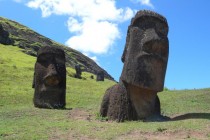
Rapa Nui - the indigenous name of Easter Island, where the people of Polynesian origin from the 10th to the 16th centuries erected huge stone figures (moai), altars (ahu) and also left behind rock art.
In 1966, Parque nacional Rapa Nui was established, which today covers 7,150.88 ha, which is 43.5% of the island's area. The Museo Antropológico Padre Sebastián Englert (MAPSE), also known as Mapse Museo Rapanui, was founded on the island in 1973. Consejo de Monumentos Nacionales |
||||||||
| 391. | 222 | Tiwanaku | Bolivia | Tiwanaku | Archaeological site | More | ||
|
The ruins of Tiwanaku (Tiahuanaco), a pre-Columbian city, cover an area of approximately 400 hectares.
Tiwanaku is located at an altitude of approximately 3,850 meters above sea level. The city was founded around 110 AD and collapsed around 1000 AD. The city was first recorded in written history in 1549 by the Spanish conquistador. The main structures are the Akapana, Kalasasaya, Pumapunku and the Semi-Subterranean Temple terraced step platforms. Other monuments include the Gate of the Sun, Gate of the Moon, Fraile Monolith, Bennett Monolith. Tiwanaku is home to the Museo Cerámico and Museo Lítico administered by the Centro de Investigaciones Arqueológicas, Antropológicas y Administración de Tiwanaku (CIAAAT) and the Museo Regional de Arqueología de Tiwanaku administered by the Dirección Nacional de Arqueología y Antropología (DINAAR). |
||||||||
| 392. | 371 | The Tank Museum | United Kingdom | Bovington | Military | More | ||
|
The Tank Museum was established in 1947.
The Tank Museum has a very large and varied collection centred mainly on armoured fighting vehicles, but also including related artefacts, archives and supporting objects. Here are the main components of what it holds: Main Collections 1. Tank / Armoured Fighting Vehicle Collection - Almost 300 vehicles from over 26 countries. - Vehicles span from the early prototypes of WWI (e.g. Little Willie) through to modern main battle tanks (e.g. Challenger 2). - Highlights include: • Tiger 131, the only operational Tiger I in the world. • Rare WWI machines (Marks I, IV, V etc.). • Cold War tanks (T-54, T-62, etc.) and vehicles from post-WWII conflicts and development. 2. Archive & Supporting Collection - The museum maintains a research archive designated as a Place of Deposit for The National Archives. - Formats include: documents, technical drawings, maps, photographs, moving images, books, journals, etc., largely centred on armoured warfare and the history of the Royal Armoured Corps / Royal Tank Regiment. - The Supporting Collection (non-vehicle objects) includes uniforms, medals, flags, weapons and ammunition, models, art, radios, technical instruments etc. 3. Exhibition Halls / Themed Displays - The Museum is organised into halls by era or theme: WWI Hall, Inter-War Hall (“War Horse to Horsepower”), WWII Hall, “The Tank Story Hall”, plus Cold War / modern era halls. - There is also a Vehicle Conservation Centre where some of the collection (or parts of it) are displayed in states of restoration / maintenance, giving visitors insight into how conservation work is done. 4. Memorial & Commemorative Components |
||||||||
| 393. | 159 | National Museum of Natural History | Bulgaria | Sofia | National – natural... history, biodiversity, paleontology, mineralogy | More | ||
|
The National Museum of Natural History – Sofia is the oldest and richest natural history museum on the Balkan Peninsula, affiliated with the Bulgarian Academy of Sciences. Founded in 1889, the museum studies, preserves and exhibits extensive collections of animals, plants, fossils, minerals, and other natural specimens, with nearly 1.5 million items. Its mission includes research, education, and the dissemination of knowledge about biodiversity, ecology, and the natural world both in Bulgaria and internationally.
|
||||||||
| 394. | 371 | National Museum of Contemporary Art Athens | Greece | Athens | Contemporary art | More | ||
|
The National Museum of Contemporary Art Athens (EMST) has been operating since 2000.
The EMST collection includes works by Greek and international artists such as Stephen Antonakos, Chryssa, Marina Abramović, Nam June Paik. It is painting, sculpture, graphics, photography. video, installations, industrial design, new media from the second half of the 20th century and modern times. |
||||||||
| 395. | 304 | Museo de la Ciencia y el Juego | Colombia | Bogotá | Museo interactivo... de ciencia | More | ||
|
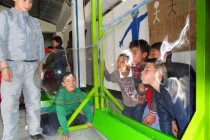
El Museo de la Ciencia y el Juego, MCJ, creado en 1984, ha venido realizando programas, proyectos y actividades en el campo de la popularización y divulgación de la ciencia y la tecnología, no solo en Colombia sino en la región, siendo pionero en su campo: fue el primer museo interactivo de ciencia en Colombia, el segundo en Suramérica y el tercero en Latinoamérica. Gracias al éxito de sus propuestas ha servido de base o ejemplo a otras iniciativas. En 1997 se hizo merecedor al Primer Premio Latinoamericano de Popularización de la Ciencia y la Tecnología otorgado por la UNESCO y la Red de popularización de la Ciencia y la Tecnología en América Latina y el Caribe, Red-POP por su programa Red de pequeños museos interactivos.
Lo que ha hecho el MCJ es tejer redes a lo largo de su existencia. Es miembro fundador de la Red Pop, de la que ejerció la Secretaría Ejecutiva en el bienio 2000 – 2001 y posteriormente la coordinación del Nodo Andes de la Red-POP. También fue gestor de Liliput, red de pequeños museos del Área Andina, de la cual ejerce actualmente la dirección ejecutiva y de la Escuela Latinoamericana de Museología de las Ciencias. El Museo realiza alrededor de 13 programas que constituyen la urdimbre y la trama de las redes que ha venido tejiendo a lo largo de más de 25 años de actividades. |
||||||||
| 396. | 325 | National Museum of Ethiopia | Ethiopia | Addis Ababa | National - archeology,... history, art, ethnography | More | ||
|
National Museum of Ethiopia (NME) founded in 1958.
The most important exhibits: - Lucy (Australopithecus afarensis), fossilized remains of an early hominin, 3.18 million years ago - Selam (Australopithecus afarensis), fossilized remains of an early hominin, 3.3 million years ago - Ethiopian Crown - Throne of Emperor Haile Selassie The NME has around 4,000 exhibits. |
||||||||
| 397. | 483 | Lahore Museum | Pakistan | Lahore | Archeology, history,... religion, art, ethnography | More | ||
|
The origins of the Lahore Museum date back to 1865.
The Lahore Museum has in its collections: - a collection of Gandhara sculptures (e.g. Posting Buddha) - archaeological monuments from the Bronze Age (Indus Valley Civilization) - a collection of Hellenistic and Mughal coins (38,000) - miniature paintings - manuscripts - seals of the Indus - stone inscriptions - Mughal and Sikh carved woodwork - a collection of paintings from the British period (1857 - 1947) The museum also features artifacts from Burma, Bhutan, Nepal, Tibet, Central Asia, the Middle East, and Africa, among others. In its collections, the Lahore Museum has about 60,000 artifacts, of which 14,000 are presented in exhibitions. The main building has an area of 24,000 square meters. |
||||||||
| 398. | 306 | Danar Hadi Batik Museum | Indonesia | Surakarta (commonly called Solo) | Batik | More | ||
|
The Danar Hadi Batik Museum, also known as the House of Danar Hadi (HDH), was founded in 2008.
Next to the HDH is the Danar Hadi Ancient Batik Museum (Museum Batik Kuno Danar Hadi), opened in 2002, which stores at least 10,000 pieces of batik clothes and is one of the largest batik collections in Indonesia. About 1,000 batiks are on permanent exhibition. They come from different regions throughout Indonesia and from different cultural influences and periods (from the 18th century to the present day), such as Chinese, Indian, Dutch, as well as from different regions throughout Indonesia. |
||||||||
| 399. | 280 | Mishkan Museum of Art Ein Harod | Israel | Ein Harod | Art | More | ||
|
The Mishkan Museum of Art Ein Harod was founded in 1937.
The museum has collections of Jewish art, Israeli art and Judaica. Jewish art includes painting, sculpture, graphics and photography created in the second half of the nineteenth century and the first half of the twentieth century. These are works by, among others, Jozef Israëls, Leopold Horowitz, Mauricio Gottlieb, Shmuel Hirschenberg, Isidor Kaufmann, Max Liebermann, Yitzhak Levitan, Moïse Kisling. The museum collection also includes works by contemporary Israeli artists who have been working since the beginning of the 20th century. The Judaica collection includes religious utensils from the 18th century to the present day, from Jewish communities around the world. The museum has collected over 16,000 works. |
||||||||
| 400. | 485 | Museo Storico e il Parco del Castello di Miramare | Italy | Trieste | Historic house | More | ||
|
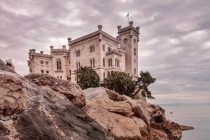
The Miramare Castle and park were commissioned by Archduke Maximilian of Hapsburg who decided—around 1855—to build a residence worthy of his name and rank outside of Trieste, looking out to the sea and surrounded by a wide garden.
The Park of Miramare, with a surface of 22 hectares, is the result of Maximilian’s long and demanding project on the rocky promontory of Grignano, which originally resembled a Karst area almost devoid of vegetation. The museum opened to the public in 1929. |
||||||||
| 401. | 333 | National Historical Museum | Argentina | Buenos Aires | National - history | More | ||
|
National Historical Museum (Museo Histórico Nacional) was established in 1889. It officially opened to the public in 1891.
The National Historical Museum houses a vast collection of artifacts that chronicle Argentina’s history, focusing primarily on the country's struggle for independence and the 19th century. Key highlights of its collections include: 1. Historical Artifacts and Memorabilia - Weapons: Swords, sabers, and guns used during the independence wars. - Flags and Banners: National flags, including those used by revolutionary armies. - Military Uniforms: Uniforms of key figures like General José de San Martín and other military leaders. 2. Personal Belongings of National Heroes - Items that belonged to José de San Martín, Manuel Belgrano, and Juan Manuel de Rosas, among others. - San Martín's saber: One of the museum’s most treasured items. 3. Documents and Manuscripts - Original letters, decrees, and proclamations from the independence era. - Treaties and correspondence between revolutionary leaders. 4. Fine Art Collection - Paintings depicting significant moments in Argentine history, such as battles and revolutionary events. - Works by renowned Argentine artists like Cándido López, who documented the Paraguayan War (War of the Triple Alliance) through his paintings. 5. Furniture and Everyday Items - 19th-century furniture from notable homes and public buildings. - Items showcasing daily life during Argentina’s formative years. 6. Religious and Cultural Artifacts - Religious items, including crosses and church relics, reflecting the role of the Catholic Church in Argentina’s history. 7. Numismatics and Medals - Coins, medals, and currency from Argentina’s early years as a nation. 8. Archaeological Artifacts - Pre-Columbian artifacts from various indigenous cultures, offering insight into Argentina’s history before colonization. The National Historical Museum has a collection of approximately 50,000 artifacts, about 4,000 artifacts are on display. The museum complex, including its gardens and exhibition spaces, covers approximately 4,000 square meters. The exhibition area itself is around 1,600 square meters. |
||||||||
| 402. | 1213 | National Museum of Saudi Arabia | Saudi Arabia | Riyadh | National – history,... archeology | More | ||
|
The National Museum of Saudi Arabia situated on King Faisal Road in the al-Murabba district and part of the King Abdulaziz Historical Centre, the museum officially opened on 23 January 1999 to mark the centennial of Saudi Arabia’s founding.
Designed by Canadian architect Raymond Moriyama, the museum draws inspiration from the red desert sands and Najdi architectural motifs, featuring sweeping limestone walls that evoke both Riyadh’s landscape and its spiritual direction toward Mecca. Museum Layout & Exhibitions Divided into eight permanent halls, the museum presents a chronological narrative of Saudi and Arabian history: 1. Man and the Universe – Prehistoric life, fossils, meteorites. 2. Arabian Kingdoms – Artifacts from pre-Islamic civilizations like Dilmun and Thamud. 3. Pre-Islamic Era – Cultural practices and script evolution before Islam. 4. Prophet’s Mission – Life of Prophet Muhammad; includes manuscripts and family lineage displays. 5. Islam and the Arabian Peninsula – Islamic history through the collapse of the Ottoman Empire. 6. First & Second Saudi States – Models of Diriyah and insights into early Saudi governance. 7. Unification of the Kingdom – King Abdulaziz’s role in forming modern Saudi Arabia. 8. Hajj & Two Holy Mosques – Models and explanations of religious importance in Mecca and Medina. Exhibits include life-sized skeletons, dioramas, meteorite fragments, a Nabatean tomb reconstruction, Islamic manuscripts, and multimedia installations such as touchscreens and films. The National Museum of Saudi Arabia houses approximately 4,413 archaeological and historical artifacts in its collection, displayed across around 221 display cabinets. The main building of the National Museum of Saudi Arabia covers about 37,080 m². Meanwhile, external estimates suggest a total site or footprint area closer to 17,000 m², with some sources citing about 28,000 m²—likely reflecting slightly different definitions (such as including auxiliary spaces or outdoor areas). |
||||||||
| 403. | 119 | Museo de Arte Precolombino Casa del Alabado | Ecuador | Quito | Art | More | ||
|
The Museo de Arte Precolombino Casa del Alabado is a small, intimate institution dedicated to Pre-Columbian art, housed in a 17th-century colonial home in the historic center of Quito. We safeguard a collection of more than 8,000 archaeological pieces, spanning over 8,000 years of history from across the ancient cultures of Ecuador.
Casa del Alabado is often described by visitors as a "hidden gem." Those who discover it are deeply moved by the experience. The silence of the house, the poetic museography, the dialogue between ancient objects and living architecture, and the presence of native trees in its inner courtyards create an atmosphere of contemplation that many describe as unforgettable. The museum is a space to cultivate sensitivity, and connection with ancestral knowledge. We work continuously on educational programs, research-based narratives, and community engagement, seeking to make pre-Columbian heritage speak to contemporary audiences in meaningful ways. We truly believe that this small house in the Andes holds a universal story worth sharing. |
||||||||
| 404. | 67 | National Museum of the United States Air Force | USA | Dayton, (Ohio) | National - military,... aviation | More | ||
|
The National Museum of the U.S. Air Force has faced controversy mainly over serious collection mismanagement in the late 1990s and early 2000s, when internal audits and investigations revealed that thousands of artifacts had gone missing, been improperly disposed of, or stolen, including historically significant items. A former museum official was implicated, and weak record-keeping, poor oversight, and inactive advisory boards were criticized by investigators and veterans’ groups. Although reforms were reportedly introduced afterward, the episode damaged public trust and highlighted broader ethical and accountability challenges in managing military heritage.
Director David Tillotson |
||||||||
| 405. | 306 | Guinness Storehouse | Ireland | Dublin | History of brewing | More | ||
|
The Guinness Storehouse opened to the public on December 2, 2000. The building it is located in dates back to 1904 and was originally used as a fermentation warehouse at the Guinness brewery.
The Guinness Storehouse is an interactive museum dedicated to the history and heritage of the Guinness brand. The museum creates a fascinating story about the over 250-year-old tradition of one of the most recognizable beers in the world. Its collection includes a number of exhibits that show the beer brewing process, the history of the brewery and the brand's influence on culture and advertising. The highlights of the exhibition include: 1. Guinness History: Exhibits illustrating the brewery's origins from its founding by Arthur Guinness in 1759, including the original 9,000-year lease. 2. Beer brewing process: Presentation of the individual stages of Guinness beer production, such as the selection of ingredients (water, barley, hops, yeast), fermentation, maturation and packaging. 3. Advertising and Marketing: A collection of posters, television commercials and other promotional materials that reflect the brand's iconic advertising campaigns over the years. 4. Gravity Bar: Located on the top floor of the building, the bar offers panoramic views of Dublin. This is part of an exhibition that shows how Guinness has become an integral part of the Irish landscape. 5. Interactive exhibitions: Guests can use various interactive stations that allow them to learn more about the beer brewing process and the history of Guinness. Most of the exhibits you can see are items related to the history of the Guinness Brewery, such as: - Old barrels, tools and equipment related to beer production. - Historic Guinness beer bottles and labels. - Advertising posters and original marketing materials. - Copies of historical documents, including contracts and records relating to the brewery. The Guinness Storehouse in Dublin covers an area of approximately 14,000 square meters. The exhibition area is approximately 5,000 square meters. |
||||||||
| 406. | 483 | Diocesanmuseum St. Afra | Germany | Augsburg | Art | More | ||
|
Diocesanmuseum St. Afra was opened in 2000.
Located just behind the Cathedral the Diocesanmuseum St. Afra presents sacred art from 17 centuries. In these partly historical partly newly created rooms the exciting and eventful history of church and art in and around Augsburg comes alive. The Museum holds an extensive collection of Baroque Augsburg goldsmith's work from liturgical equipment and reliquaries. The most beautiful of which are permanently on display in the exhibition. Special works, such as the textiles from the 10th century, the cathedral's Ottonian bronze portal or the funeral weapons of Emperor Charles V, are unique in their form. |
||||||||
| 407. | 255 | Copán | Honduras | Copán | Archaeological site | More | ||
|
Copán was founded as a Maya settlement around the 9th century BC, but it rose to prominence as a major city during the Classic Period of Maya civilization.
The dynastic history of Copán officially begins in AD 426, when K’inich Yax K’uk’ Mo’ established the ruling dynasty, likely with influence from the more powerful Maya city of Tikal. This marked the start of Copán's most significant political and cultural era, lasting until the early 9th century AD, when the city began to decline. Below are the main monuments and features of the site: 1. Acropolis - A massive complex of temples, plazas, tombs, and altars. - Divided into two main areas: • West Court: Associated with ancestor worship and rituals. • East Court: Likely used for royal residences and political functions. - Includes several pyramidal temples, many of which served as burial sites for rulers. 2. Temple 26 ("Hieroglyphic Stairway Temple") - Most famous monument at Copán. - Features the longest known Maya hieroglyphic inscription (63 steps, 2,000+ glyphs). - Commemorates the history of Copán’s dynasty, especially K’inich Yax K’uk’ Mo’ and his successors. - Commissioned and expanded by Uaxaclajuun Ub'aah K'awiil (18 Rabbit). 3. Ball Court - One of the largest and best-preserved Maya ball courts. - Flanked by large macaw-shaped markers (macaws were sacred to the Copán dynasty). - The ballgame was both sport and ritual, often connected to cosmology and elite politics. 4. Great Plaza - An open ceremonial space showcasing stelae and altars. - Many of these stelae depict Copán’s rulers, especially Stela A, B, C, D, F, H, and J. - These monuments show intricate details of kings' dress, symbols of power, and inscriptions. 5. Stelae and Altars - Copán is famous for its elaborately carved stelae, often paired with round or square altars. - Many stelae date from the reign of 18 Rabbit, who elevated Copán's sculptural art to its peak. - The altars sometimes represent cosmological concepts (e.g. world trees, directional stones). 6. Temple 11 - Believed to be a portal between worlds, connecting the earthly realm to the underworld and heavens. - Associated with the last known ruler, Yax Pasaj Chan Yopaat. 7. Temple 16 ("Temple of the Inscriptions") - Built over the tomb of K’inich Yax K’uk’ Mo’, the dynastic founder. - Known for its layered construction—several temples were built atop one another over time. 8. Sculpture Museum - Located at the site, it houses original sculptures removed from the ruins for preservation. - Includes a full-scale reconstruction of the Rosalila Temple, a brilliantly colored, early temple buried intact under Temple 16. 9. Residential and Administrative Zones - The Las Sepulturas complex, just outside the core, reveals elite residences, craft workshops, and administrative buildings. - Helps archaeologists understand daily life, economics, and urban planning. The Copán archaeological site covered a total area of approximately 24.6 square kilometers at its peak during the Classic Period (ca. 400–800 CE). Several museums in Honduras and internationally preserve and exhibit monuments, artifacts, and sculptures from Copán, offering key insights into Maya civilization. Here are the most important ones: 1. Museums in Honduras - Museo de la Escultura Maya (Museum of Maya Sculpture) - Museo Regional de Arqueología Maya 2. International Museums with Copán Artifacts - Peabody Museum of Archaeology and Ethnology, Harvard University, Cambridge, Massachusetts, USA - National Museum of the American Indian (Smithsonian Institution), Washington, D.C., USA - Metropolitan Museum of Art, New York City, USA - Museo de América, Madrid, Spain |
||||||||
| 408. | 1346 | Holmenkollen Ski Museum | Norway | Oslo | Ski | More | ||
|
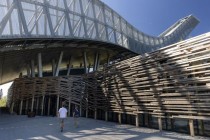
The Holmenkollen Ski Museum, situated beneath the iconic Holmenkollen Ski Jump in Oslo, is the world's oldest museum dedicated to skiing. Established in 1923, it showcases over 4,000 years of skiing history, including ancient skis and polar exploration artifacts.
The museum's exhibits include: - Ancient Skis: Featuring some of the oldest known skis, including the Drevja ski, which is over 5,000 years old. - Viking Age Artifacts: Showcasing rock carvings and skis from the Viking period, illustrating early skiing culture in Norway. - Modern Ski Equipment: Displaying racing and cross-country skis, as well as snowboards, highlighting the evolution of skiing equipment. - Polar Exploration Gear: Exhibiting equipment used by renowned explorers like Fridtjof Nansen and Roald Amundsen, offering insights into historic polar expeditions. - Olympic Memorabilia: Presenting artifacts and photographs from the Winter Olympics held in Oslo in 1952 and Lillehammer in 1994. The Holmenkollen Ski Museum in Oslo boasts a collection of approximately 4,000 exhibits. Among these, the museum displays around 2,500 pairs of skis, including those belonging to notable Norwegian skiers and members of the Royal Family. The museum underwent significant renovations for its centenary in 2023, with architectural firm Snøhetta designing a new extension and outdoor entrance. The newly designed extension encompasses an area of 525 square meters. Visitors can also enjoy panoramic views of Oslo from the observation deck atop the ski jump tower. Photo: Andreas Bache-Wiig/Skimuseet |
||||||||
| 409. | 169 | Sexmuseum Amsterdam | Netherlands | Amsterdam | Sex museum | More | ||
|
The Sexmuseum Amsterdam, also known as the Venustempel, was established in 1985. It opened to the public in the same year.
The Sexmuseum Amsterdam houses an extensive collection dedicated to the history of human sexuality. Its exhibits include: 1. Erotic Art & Sculptures - Ancient and modern erotic sculptures - Classical paintings and drawings depicting sensual themes 2. Historical Artifacts - 19th and 20th-century erotic photography - Vintage postcards and illustrations of burlesque and cabaret culture - Items related to famous historical figures associated with sexuality 3. Film & Multimedia - Early erotic films from the 19th and 20th centuries - Audio recordings and interactive displays showcasing attitudes toward sex in different eras 4. Fetish & Kinky Artifacts - Vintage lingerie and fetish objects - BDSM-related historical items 5. Celebrity Exhibits - Sections dedicated to iconic figures like Marilyn Monroe and Mata Hari, with memorabilia and historical context 6. Cultural & Religious Depictions of Sexuality - Art and objects from cultures worldwide, depicting sexuality in religious and cultural contexts The museum provides an educational and historical perspective on human sexuality while maintaining a playful and entertaining atmosphere. |
||||||||
| 410. | 303 | Royal Museum for Central Africa | Belgium | Tervuren | Ethnography, natural... history, history, art | More | ||
|
The Royal Museum for Central Africa (AfricaMuseum) was established in 1898. The museum was officially opened to the public on April 30, 1910.
The Royal Museum for Central Africa houses one of the world's most extensive collections related to Central Africa, particularly focusing on the Democratic Republic of the Congo (formerly Belgian Congo). Main Collections of the Royal Museum for Central Africa 1. Ethnographic & Cultural Artifacts - Traditional masks, sculptures, and musical instruments from Central African ethnic groups such as the Luba, Kuba, and Songye. - Everyday objects, textiles, and weapons from various African cultures. - Royal regalia and court artifacts from African kingdoms like the Kuba Kingdom. - Ritual objects, including fetishes and power figures (nkisi nkondi) used in spiritual practices. 2. Natural History & Zoological Collections - Extensive botanical and zoological specimens, including stuffed animals, skeletons, and insect collections. - Fossils and minerals from Central Africa, showcasing geological diversity. - Specimens from major African ecosystems, including the Congo rainforest and savanna. 3. Historical Archives & Colonial Artifacts - Documents, photographs, and films from the colonial period (1885–1960). - Artifacts related to the Force Publique, the Belgian colonial army. - Maps, reports, and missionary records detailing early European exploration in Africa. - Personal belongings of historical figures such as Henry Morton Stanley and King Leopold II. 4. Artistic Collections - Contemporary African art, including paintings and sculptures from modern Congolese artists. - Colonial-era paintings and propaganda materials depicting Belgium’s role in Central Africa. - Photography collections showcasing African daily life and traditions. 5. Linguistics & Musicology - One of the largest collections of Central African languages and dialect recordings. - Traditional African musical instruments, such as drums, xylophones, and thumb pianos (mbira). - Field recordings and ethnographic studies of African oral traditions and storytelling. The Royal Museum for Central Africa holds a massive collection of approximately 10 million objects, only about 8,000 to 10,000 objects are on display at any given time in exhibitions. The Royal Museum for Central Africa, has a total area of approximately 25,600 square meters. Around 11,000 square meters is dedicated to public exhibitions. Copyright: MRAC |
||||||||
| 411. | 232 | Etihad Museum | United Arab Emirates | Dubai | Cultural landmark,... history | More | ||
|
Etihad Museum is a cultural landmark in Dubai that tells the story of the founding of the United Arab Emirates in 1971. Located near the historic Union House, the museum offers interactive exhibits and archival materials showcasing the events that led to the unification of the nation.
|
||||||||
| 412. | 236 | Château de Montsoreau - Museum of contemporary art | France | Montsoreau | Contemporary art | More | ||
|
Created in April 2016 on the initiative of the French contemporary art collector Philippe Méaille, the Château de Montsoreau - Museum of contemporary art is a radical, committed, living place.
Its permanent collection is the world's largest collection of works from the Art & Language movement. It is located two hours from Paris, in the Loire Valley World Heritage of Unesco. Innovative, experimental and unexpected, the cultural program of the Château de Montsoreau - Museum of contemporary art is organized around temporary exhibitions, events, meetings, concerts and performances. |
||||||||
| 413. | 74 | Baltimore Museum of Art | USA | Baltimore | Art | More | ||
|
The Baltimore Museum of Art (BMA) was founded in 1914 when it was officially incorporated and began building its collection. Its permanent building opened to the public on April 19, 1929.
In October 2020, the BMA announced it would sell three major paintings — by Andy Warhol, Brice Marden, and Clyfford Still — from its permanent collection to raise roughly $65 million for diversity, equity, and inclusion programs as well as other institutional needs. The plan immediately sparked widespread criticism from museum professionals, donors, and community members, who argued that selling high-value works to fund general operations and equity initiatives violated museum ethics and deaccessioning norms. Many said collections should not be treated as financial assets. Backlash included: - Letters to Maryland officials calling for intervention. - Artists resigning from the museum’s board. - Two former board chairs rescinding $50 million in pledged gifts in protest. - National media criticism of both the plan and museum leadership. Less than 24 hours before the scheduled auction, the BMA canceled the sale in response to the firestorm of criticism — a dramatic reversal that highlighted governance tensions and ethical debates in the museum world. Director Asma Naeem. |
||||||||
| 414. | 280 | National Space Museum | Nigeria | Obasanjo Space Centre, Umaru Musa Yar'Adua Expressway, Abuja, Federal Capital Territory | National - space | More | ||
|
The National Space Museum, a facility under the National Space Research and Development Agency (NASRDA). Located at the Obasanjo Space Centre on Umaru Musa Yar'Adua Expressway in Abuja, the museum serves as a gateway to understanding the nation's space endeavours and the broader universe.
A significant development for the museum is a public-private partnership with Milky-Way Visuals Ltd., the commercial arm of NASRDA. This collaboration is set to transform the museum into a world-class facility, complete with a state-of-the-art planetarium. The N3.5 billion project, financed by private investment, aims to enhance the visitor experience through cutting-edge technology, interactive science exhibits, and robust educational programs. Unveiling Nigeria's Space Saga: The Exhibits The museum's collection is designed to chronicle Nigeria's space journey and inspire future generations. Information points to several key attractions: Real-time Satellite Visualization: This interactive exhibit is a major draw, allowing visitors to see real-time data and visualizations of satellites in orbit, including Nigeria's own fleet like NigeriaSat-2, NigeriaSat-X etc. This display offers insight into the different types of satellites, their orbits, and their critical functions in communications, remote sensing, and more. The Astronomy Corner: Delving into the wonders of the universe, this section provides an engaging and interactive learning experience about celestial objects. Visitors can expect to learn about stars, galaxies, planets, and other phenomena that populate the cosmos. Showcasing Nigerian Satellites: The museum undoubtedly features exhibits detailing Nigeria's satellite missions, from the launch of NigeriaSat-1 to the latest advancements. These displays include models of Nigerian satellites and information on their contributions to national development in areas such as agriculture, security, and disaster management etc. Interactive Learning: In line with the partnership with Milky-Way Visuals, the museum features a strong emphasis on interactive and hands-on learning experiences. This includes the development of educational materials and the hosting of STEM workshops for all ages, aimed at fostering a greater understanding and appreciation of space science and technology. |
||||||||
| 415. | 368 | Museum Kimchikan | South Korea | Seoul | Food | More | ||
|
Museum Kimchikan opened in 1986 as the Kimchi Museum.
The museum is dedicated to kimchi, one of the foundations of Korean cuisine. Kimchi is a spicy dish made of fermented vegetables with a predominance of cabbage with toppings. The museum is divided into three parts, the first presents the history of kimchi, the second shows how kimchi is prepared and what its nutritional benefits are, the third presents a multitude of historical and regional varieties. |
||||||||
| 416. | 102 | Bytown Museum | Canada | Ottawa | Urban - history | More | ||
|
The Bytown Museum was established in 1917, founded by the Women’s Canadian Historical Society of Ottawa, initially known as the Bytown Historical Museum.
The Bytown Museum offers a rich array of collections and exhibitions that delve into the city’s birth and development—from its Indigenous roots to modern-day Ottawa: - Permanent Collection (‘Where Ottawa Begins’) Explores the Ottawa Valley’s early history—from the Anishinàbe Algonquin First Peoples and the founding of Bytown—through the construction of the Rideau Canal and its wild lumberjack era. Continues through the Victorian era, the burning of the Parliament Buildings, and Canada’s involvement in international conflicts. Notable treasures include a cast of Thomas D’Arcy McGee’s death hand, canal-era stone vault doors, historic lithographs and engravings (e.g., 1859 “City of Ottawa” lithograph), and artifacts related to Indigenous and settler life. - Temporary & Community Galleries Feature rotating exhibitions on local, regional, and social history: recent examples include health-care evolution (e.g., Capital Healers). - Digital ‘Stories from the Collection’ A cutting-edge digitization initiative with Carleton Immersive Media Studio, offering 3D-modelled artifacts drawn from storage and galleries. The collection spans Indigenous artifacts, industrial tools, women’s stories, wartime and peacetime life. - Extra Highlights A kids’ zone titled ‘A Day in My Life’, located in the community gallery, brings history to life for younger audiences. The Bytown Museum holds an impressive collection of nearly 15,000 artifacts. |
||||||||
| 417. | 259 | Sudetendeutsches Museum | Germany | Munich | Culture/history | More | ||
|
History has a new home
The Sudeten German Museum is the central museum of the German-speaking population in the Bohemian lands. The permanent exhibition spans more than 1,100 years of the history of the region, its art and its culture. That history is related by authentic objects from the museum collections exhibited in a space measuring 1,200 square metres. Under the overall concept of “homeland”, the Sudeten German Museum focuses on the life of the Germans in Bohemia, Moravia and Sudeten Silesia – what is today’s Czech Republic. The exhibition begins with the section on “Homeland!”, which describes the landscape and its inhabitants in the cultural, religious and economic context before 1945. Under the heading “The End of the Accepted Order”, it examines the political and social developments of the 19th century up to the catastrophe of World War II and the expulsions in the 20th century. “Homeland?” – now with a question mark – depicts the difficult new beginning and the integration of the Sudeten Germans in the West. For centuries, the homeland of the Sudeten Germans in Bohemia, Moravia and Sudeten Silesia was shaped by the coexistence of three peoples – the Germans, the Czechs and the Jews. The Sudeten German Museum takes a look at this common homeland in all its facets, from which emerges the picture of a model cultural landscape of pan-European significance. The Sudeten German Museum presents established facts in a lively and easy-to-understand way. Owing to its modern design, which incorporates the use of media, and its architecturally outstanding building, the museum leaves its mark far beyond the Bavarian state capital of Munich. |
||||||||
| 418. | 188 | Museu do Pão | Portugal | Seia, Serra da Estrela | Bread museum | More | ||
|
Inaugurated in September 2002, in Seia, at the heart of the Serra da Estrela mountains, the Bread Museum is today a landmark in Portuguese museology and the largest complex in the world dedicated to the theme. It is not a museum to simply look at – it is one to feel, to listen with your hands, to taste with your eyes, and to learn with your soul. The Bread Museum belongs to everyone who finds themselves in it. It is shared memory, heritage with the scent of warm bread from the oven.
This museum holds 12,000 years of human history through the most universal of all foods. Here, time slows down and echoes the footsteps of those who sowed, harvested, kneaded, and baked. The mills tell stories, and the ancestral act of making bread – simple, hard, essential – is revealed as one of civilisation’s greatest gestures. |
||||||||
| 419. | 314 | Lippisches Landesmuseum Detmold | Germany | Detmold | Art, history, natural... history | More | ||
|
The Lippisches Landesmuseum, located in the heart of Detmold, houses extensive collections in the fields of art, culture, and natural history. The selection of exhibits ranges from Stone Age artifacts to historical toys, furniture, clothing, and valuable oil paintings. The exhibition "Mythos" showcases the most comprehensive collection nationwide on the history of the Battle of the Teutoburg Forest between the Germanic tribes and the Romans. Numerous objects and modern media illustrate how this historical event became a myth of German history.
The "Cultures of the World" collection holds a very special treasure: a 6,500-year-old child mummy from Peru. It is considered the oldest mummy that can be viewed in Europe, older than Ötzi and nearly twice as old as the mummy of the pharaoh Tutankhamun. Local forests and exotic animal worlds from savannas, rainforests, and polar regions can all be experienced in one place. The animals are realistically displayed in their habitats, and interactive modules and stations make exploring this section a must for families with children. Start your journey in Detmold with history. Start your journey with us. |
||||||||
| 420. | 524 | Jondishapour Museum of Trade History | Iran | Shiraz | Trade and history | More | ||
|
Jondishapour Museum of Trade History was established in 2018 in Shiraz, Iran with the permission of the Ministry of Cultural Heritage and Tourism and Handicrafts. The most important of establishing the museum was Owner extreme passion to Iran and preservation of ancient history of this great country through presenting museum items. Since one of the most important tasks of museum in general is to display and preserve work of collections and offering related specialized trainings, the owner and founder of Jondishapour Museum decided to employ experts in the field of exhibition as well as restoration of historical monuments so that he could provide a secure reservoir with high-tech equipment and establish the first private restoration workshop with modern materials and equipment in Shiraz This Museum was honored as the best museum in Iran under the category of conservation & preservation indexes by the ICOM- Iran. Jondishapour Museum of the Trade History houses a treasure trove of valuable historical artifacts, inchuding metals. Potteries, ghassware, manuscripts, stamps, coins, antiques, ets.
|
||||||||
| 421. | 20 | Panstwowe Muzeum Auschwitz-Birkenau | Poland | Brzezinka | Auschwitz-Birkenau | More | ||
|
Panstwowe Muzeum Auschwitz-Birkenau was created in 1947.
In December 2009, the historic "Arbeit macht frei" sign was stolen from the gate of Auschwitz I. The case received widespread international attention. The sign was found several days later, cut into pieces, and the perpetrators were arrested (including individuals associated with the criminal community and the Swedish client). The incident sparked criticism of the museum's security. The entire area of the camps covers 191 hectares. Museum director and president of the Fundacja Auschwitz-Birkenau: Piotr Mateusz Andrzej Cywiński. |
||||||||
| 422. | 44 | „Brussels Museums” | Belgium | Jette | Communal | More | ||
|
|
||||||||
| 423. | 54 | “Museum of King Jan III's Palace at Wilanow” | Poland | Wilanow | "King Jan III's... Palace" | More | ||
|
"Museum of King Jan III's Palace at Wilanow" was established in 1995 as an independent museum.
Number of artifacts over 13,600. The museum identifying itself as: "Museum of King Jan III's Palace at Wilanow" does not provide public information upon request for such information formulated in English. An application in English for disclosure of public information addressed to the museum included, inter alia, requests to disclose: - at what stage are the claims of Count Adam Branicki's heirs against the museum? - education, promotions, professional career, competences of the management of: Paweł Olaf Jaskanis [nominee of Piotr Gliński (PiS)], Magdalena Całka, Dorota Folga-Januszewska, Piotr Górajec. https://zwokandy.blogspot.com/2021/03/the-museum-identifying-itself-as-museum.html |
||||||||
| 424. | 277 | „Gdynia City Museum” | Poland | Gdynia | „muzeum to ludzie!” | More | ||
|
1. Limited exhibition: Some visitors believe that the permanent exhibitions are too modest and do not fully reflect the city's rich history. Therefore, expectations regarding a deeper narrative about Gdynia may not be met.
2. Lack of interactivity: Compared to modern museums that offer many interactive elements, the Gdynia City Museum may seem traditional and less engaging to a younger audience. 3. Location: Although it is located in the city center, some visitors may find it difficult to find, especially if someone does not know Gdynia well. 4. Limited opening hours: Some criticism also concerns opening hours, which may not be adapted to the needs of tourists, especially on weekends. 5. Ticket price: For some visitors, the ticket price may seem too high compared to the exhibition content offered. 6. Lack of catering facilities: The lack of a café or restaurant on site may be considered an inconvenience, especially for tourists spending a long time in the museum. 7. Parking spaces for people with disabilities are located 100 meters from the museum. 8. The museum responds to visitors' intervention for no longer than 2 months. 9. Films published before September 1, 2019 do not have subtitles for the deaf, some graphic materials lack alternative texts, some documents are not digitally available. 10. The director of the museum is Karin M., an official from the city hall of former president Wojciech Sz., who was associated with former president Lech K. (PiS). Appointed to the position of acting director by the same Wojciech Sz. |
||||||||
| 425. | 11 | „Museum of Literature” | Poland | Wsola | “im. A. Mickiewicza” | More | ||
|
Par. organized c. group claiming to be the „Museum of Literature”, board of the mas. voi. and mini. of cul. in violation of Article 23 of the Act on Access to Public Information failed to provide public information, for example on the following topics:
- date of founding, - number of affiliates, - exhibition space, - number of exhibits, - most important exhibits, - most important collections, - revenue, - costs, - attendance, - permanent exhibitions, - temporary exhibitions, - education, promotions, career path, competences: Anna Lipa, Maciej Wróbel (KO), Adam Kowalski, Piotr Kłoczowski, Kamila Wesołowska, Maciej Makulec, Beata Szmigiero, Piotr Rypson, Edyta Plichta, Rafał Rajkowski (KO), Urszula Więch-Jędras, Katarzyna Jakimiak, Grażyna Ryfka, Martyna Replin-Bala, Urszula Pogorzelec-Makos, Małgorzata Kawecka, Katarzyna Piktel, Andrzej Stanisław Kowalczyk, Małgorzata Wichowska, Anna Szczepanek, Agnieszka Papieska, Amadeusz Szklarz-Habrowski, Aleksandra Kujawa-Eberharter, Walery Butewicz, Anna Lebensztejn, Jan Owczarek, Łukasz Kossowski (In the mid-2000s, journalists created a forged painting in the style of Franciszek Starowieyski as part of a sting operation to test art experts. The work, titled “Zjawa,” was authenticated as genuine by art historian Łukasz Kossowski and sold at auction. The journalists then revealed it was a deliberate fake. After art journalist Janusz Miliszkiewicz publicly criticized him, Kossowski sued for defamation. In 2011, the court dismissed the case, ruling that the criticism was justified.), Piotr Szpanowski, Piotr Policht, Sonia Jaszczyńska, Emilia Tomasik , Edyta Kędrek-Motyka, Natalia Malek, Agnieszka Maria Kuźmińska (PSL formerly PiS), Maria Dembińska, Julian Adamczyk, Piotr Prasuła, Łukasz Traczyk, Małgorzata Ziąbska, Teresa Wielgosz, Anna Polit, Anna Molska, Beata Turczyk, Piotr Dymmel, Olga Wybodowska, Marcin Komosa (PSL), Anna Katarzyna Brzezińska (KO), Karolina Więckowska, Alicja Szóstka, Anna Żochowska, Tomasz Chojczak, Szczepan Wojewódzki, Marta Słowik, Izabela Stelmańska (PSL), Marek Skrzyński, Elżbieta Rogowska (PL 2050 Szymon Hołownia), Edward Kucharski, Marta Cienkowska (PL 2050 Szymon Hołownia), Izabela Zychowicz, Roksana Gawrońska, Lech Gołębiewski, Paweł Eryk Martofel (KO), Jarosław Klejnocki, Jakub Makowski, Andrzej Fiett, Janina Ewa Orzełowska (PSL), Anna Nowacka, Ilona Lewandowska, Magdalena Busz, Edyta Kędrek-Motyka, Małgorzata Zatorska, Grażyna Grabowska, Katarzyna Goraj, Inga Kowalik, Bartłomiej Kwasek, Sandra Włodarczyk, Justyna Radziukiewicz, Małgorzata Górzyńska, Grażyna Grochowiakowa, Magdalena Durko-Stępień, Anna Grochowiak, Anna Kowalska, Maciej Bociański, Jarosław Mikołajewski, Maryla Śledzianowska, Jan Barański, Maria Dorota Pieńkowska, Filip Bojarski, Adam Struzik (PSL), Wiesław Raboszuk (KO), Beata Michalec (KO). Par. organized c. group, as part of providing public information, did not provide the names, surnames and affiliations of the members of the commissions that elected the director of the „Museum of Literature” in 2024-2026. The selection of the director of the „Museum of Literature” has recently become the subject of a political and institutional dispute. The controversy centers on the appointment of a candidate closely associated with local politicians, which has raised concerns about transparency, professional qualifications, and political influence in cultural institutions. The conflict began after a competition for the director’s post held at the end of 2024. The jury selected a candidate with cultural-management experience, but the regional authorities of Mazovia, which supervise the museum, did not appoint the winner. Instead, they installed another candidate—Beata Michalec, a local councillor—first as acting director and later as the winner of a second competition. Critics argued that the procedures lacked transparency and were designed to favor a politically connected candidate. Reports indicated that the composition of the selection committee was dominated by officials linked to regional political parties, and that the competition’s requirements did not include clear professional qualifications in literary studies or archival work. The Ministry of Culture opposed the appointment, stating that cultural institutions should be led by qualified specialists rather than political appointees. The dispute escalated into a legal and administrative conflict between the ministry and the regional government, with the minister asking the regional governor to review the legality of the decision. As a result, the case has become an example of broader tensions in Poland over how directors of cultural institutions are selected, with critics warning against politicization and calling for more transparent, merit-based procedures. The so-called mini. of cul. withdrew from financing the museum and terminated the agreement to run the museum as a joint cultural institution. This termination means that, from January 1, 2027, the museum will remain a local government cultural institution operated solely by the so-called board of the mas. voi. |
||||||||
| 426. | 56 | „MSN” | Poland | Szumin | „miejska instytucja... kultury” | More | ||
|
Par. organized c. group claiming to be the „MSN” in violation of Article 23 of the Act on Access to Public Information failed to provide public information, for example on the following topics:
- date of founding, - number of affiliates, - exhibition space, - number of exhibits, - most important exhibits, - most important collections, - revenue, - costs, - attendance, - permanent exhibitions, - temporary exhibitions, - education, promotions, career path, competences: Joanna Mytkowska, Marcel Andino Velez, Tomasz Błażej, Sebastian Cichocki, Natalia Sielewicz, Tomasz Fudala, Agnieszka Piech, Maciej Wołosiuk, Hanna Zwierzchowska. |
||||||||
| 427. | 235 | „Muzeum Zamoyskich w Kozlowce” | Poland | Kozlowka | „Muzeum Zamoyskich” | More | ||
|
The current „m.” [Anna F.-L. (59) e.g. conservator, Małgorzata M. (62) e.g. employment and payroll specialist, Zofia K. (55) e.g. accountant] worked closely with Krzysztof K. (PZPR, SLD) as his devoted employees. Krzysztof K. questioned, contrary to the facts, the origin of museum exhibits worth millions of zlotys from the Z. collection. He took over the m. g. house for his private agritourism. He organized widely criticized hunting events with the participation of, for example, former „president” Bronisław K. (PO).
In 2015, Krzysztof K. as d. (a warm pensioner of Art Nouveau glass collector) was replaced by Anna F.-L., appointed by Sławomir S. (PSL), who claimed to be the so-called marshal of the L. voivodeship. In 2020, for the next 5-year term, he recommended Anna F.-L., claiming to be the so-called marshal of the L. voivodeship Jarosław S. (PiS). Claiming to be the so-called mini. of cu. Piotr G. (PiS) agreed to the so-called the appointment without a competition and he was convinced, for example, by the «Catholic Association "Civitas Christiana"». The current „m.” continues the entire "line" adopted by Krzysztof K. and guards his i. Why? If you don't know what the problem is... On June 22, 2018, a special event was organized together with the "Polish Hunting Association", which was met with numerous voices of protest. On the same day, Anna F.-L. was honored by Piotr G. with the "Gloria Artis" medal. The same Piotr G. appointed Anna F.-L. for the years 2021-2024 as a member of the "council for museums and places". Then, in a "secret ballot", Anna F.-L. was "chosen" for the so-called chairman of the board. The so-called the board of the L. voivodeship dismissed Anna F.-L. from the position of director. Previously, twice the so-called marshal of the L. voivodeship Jarosław S. (PiS) addressed the so-called minister of c. Piotr G. (PiS) to express his opinion on the dismissal of Anna F.-L. The so-called writings marshal's questions remained unanswered. List of charges against Anna F.-L. is long, the main ones concerned the renovation for PLN 40 million, which practically stopped, and the inappropriate spending of funds on the so-called law firm. On March 1, 2023, Jerzy D., a disability specialist, became the acting director without competition, and his deputy was Sławomir G., specializing in socialist realism, a long-time collaborator of Krzysztof K. and Anna F.-L. Jerzy D. will soon be replaced by Bożena C., an official from the so-called marshal's office, the resolution on her appointment was passed without competition on August 16, 2023 by the so-called board of the L. voivodeship. https://zwokandy.blogspot.com/2014/04/naciski-na-biegego_4064.html http://zwokandy.blogspot.com/2014/05/posrod-owieckiej-braci.html http://zwokandy.blogspot.com/2014/08/gwiazda-polskiego-muzealnictwa.html https://zwokandy.blogspot.com/2016/11/prominencka-zorganizowana-grupa-p.html https://zwokandy.blogspot.com/2017/06/eks-dyrektor-i-eks-prezydent-znowu.html http://zwokandy.blogspot.com/2017/12/gwiazda-polskiego-m-nie-traci-blasku.html https://zwokandy.blogspot.com/2017/12/nominat-wicepremiera-ministra-profesora.html https://zwokandy.blogspot.com/2018/02/krzysztof-k-sld-marszaek-sawomir.html https://zwokandy.blogspot.com/2019/07/krzysztof-k-sld-marszaek.html https://zwokandy.blogspot.com/2022/07/sprawiedliwosc-1.html https://zwokandy.blogspot.com/2023/08/artystka-w-wieku-emerytalnym.html Photo: http://zwokandy.blogspot.com/2014/08/gwiazda-polskiego-muzealnictwa.html |
||||||||
| 428. | 231 | "Museum of Warsaw" | Poland | Palmiry | „The Museum of... Warsaw collects the things of Warsaw” | More | ||
|
The "Museum of Warsaw" did not inform about the number of exhibits in the collection, the exhibition area, etc. Contrary to the judgment of the Supreme Administrative Court, reference number I OSK 634/14 did not provide public information about Marta Żakowska, Anna Duńczyk-Szulc, Rafał Kownacki, Marta Grom, Karolina Ziębińska-Lewandowska, such as: education, promotions, professional career, competences. By order signed by Rafał Trzaskowski (PO, KO), Karolina Ziębińska-Lewandowska took the position of director of the "Museum of Warsaw" from January 1, 2021. The deputy chairman of the "Museum of Warsaw" council is Jack L., brought to Poland in 2008 by Bogdan Z. (PO, KO). In 2015, the "Museum of Warsaw" tried to take over the Museum of Caricature against public opinion.
About the "Museum of Warsaw" read, for example: https://zwokandy.blogspot.com/2015/02/rekrutacje-do-muzeum-warszawy.html https://zwokandy.blogspot.com/2023/07/aplikujacy-nie-zosta-wskazany-jako.html https://zwokandy.blogspot.com/2024/05/tzw-noc-muzeow-i-pikiety-muzealnikow.html |
||||||||
| 429. | 177 | "Baths" | Poland | Baths | "Baths" | More | ||
|
The Baths independent museum since 1995.
In its present shape, Baths established in the second half of the 18th century by Stanisław August Poniatowski, who, through the bed of the later Catherine II Empress of Russia (he had a daughter with her), came to the throne of Poland (at that time Poland was under Russian protectorate and was subjected to another three partitions, which ended the existence of the First Polish Republic). The park and palace complex covers 76 hectares. Before the parliamentary and local government elections, the directors of the so-called Baths: - acting Marianna O., - deputy director for Hunting and Horsemanship Piotr Ś., the so-called department child and hunting companion of former president Bronisław K. (PO), - plenipotentiary for the organization of the Branch of the Museum of Hunting and Horsemanship Marek Z. - director's plenipotentiary for organization of exhibitions and promotion Branch of the Museum of Hunting and Horsemanship Marzena J. trying to take over the premises of the Virtual Museum of the Unbroken Soldiers, dedicated to the Polish independence and anti-communist underground after World War II, the oldest museum of this kind in Poland. Deputy Prime Minister Piotr G. (PiS) and Secretary of State Jarosław S. (PiS) are responsible for appointing the directors (without competition). Piotr Ś. is known, among others, for from conducting in the so-called a museum of a company dealing with the organization of hunting for foreigners and trade in chemicals (e.g. https://zwokandy.blogspot.com/2014/05/tu-t.html, https://zwokandy.blogspot.com/2016/12/brak-reakcji-ministerstwa.html) and false accusations of an employee of the so-called museum about the theft of a stuffed mallard duck (e.g. https://zwokandy.blogspot.com/2014/05/nieprawdziwe-oskarzenia-o-kradziez.html, https://zwokandy.blogspot.com/2014/05/zmiany-w-protokole-rozprawy-stronniczy.html, https://zwokandy.blogspot.com/2014/11/wystepy-p-piotra-s-w-sadzie.html, https://zwokandy.blogspot.com/2018/06/zorganizowana-gp-byy-d-piotr-s-tzw-sso.html) and "hijacking" copyrights (e.g. https://zwokandy.blogspot.com/2014/05/fotografie-na-stronie-internetowej.html https://zwokandy.blogspot.com/2022/08/sprawiedliwosc-4.html) and using the Star of David as the museum's sheriff's star in children's games (https://zwokandy.blogspot.com/2014/05/gwiazda-szeryfa-muzeum.html) |
||||||||
| 430. | 14 | „Casimir Pulaski Museum” | Poland | Winiary | „Casimir Pulaski” | More | ||
|
Par. organized c. group claiming to be the „Casimir Pulaski Museum” in violation of Article 23 of the Act on Access to Public Information failed to provide public information, for example on the following topics:
- date of founding, - number of exhibits, - most important exhibits, - most important collections, - attendance, - permanent exhibitions, - temporary exhibitions, - education, promotions, career path, competences: Wojciech Kudyba, Leszek Przybytniak, Aldona Rzeźnik, Witold Bujakowski, Jan Wiktor Sienkiewicz, Dorota Janiszewska-Jakubiak, Rafał Wróblewski, Krzysztof Ambroziak, Andrzej Zaręba, Marzena Kądrowska-Grochal, Iwona Stefaniak z d. Bogumił. Co-financed by the Grojec coun. (Krzysztof A. PSL-PL 2050) and the mini. of cul. (Marta C. PL 2050). |
||||||||
| 431. | 140 | „Muzeum Ziemi Chelmskiej” | Poland | Chelm | “im. Wiktora Ambroziewicza” | More | ||
|
Par. organized c. group claiming to be the „Muzeum Ziemi Chelmskiej” in violation of Article 23 of the Act on Access to Public Information failed to provide public information, for example on the following topics:
- date of founding, - number of affiliates, - exhibition space, - number of exhibits, - most important exhibits, - most important collections, - revenue, - costs, - attendance, - permanent exhibitions, - temporary exhibitions, - education, promotions, career path, competences: 1. Malgorzata Podlewska-Bem https://wlodawskie-kurioza.blogspot.com/2025/03/nominowani-do-listy-antyinnowacyjnosci.html https://wlodawskie-kurioza.blogspot.com/2025/01/kandydaci-na-nominowanych-do-listy.html https://wlodawskie-kurioza.blogspot.com/2023/12/marek-b-i-ukr-sie-pod-nickiem.html https://wlodawskie-kurioza.blogspot.com/2018/07/magorzata-p-b.html https://wlodawskie-kurioza.blogspot.com/2018/07/poczet-dyrektorow-muzeum.html 2. Jagoda Barczynska https://wlodawskie-kurioza.blogspot.com/2025/03/nominowani-do-listy-antyinnowacyjnosci.html 3. Joanna Suchocka 4. Natalia Jedruszczak |
||||||||
| 432. | 9 | „Muzeum - Zespol Synagogalny” | Poland | Wlodawa, in the former ghetto | „Zespol Synagogalny” | More | ||
|
Anita Lewczuk aka Leoniuk (PSL nominee) claiming to be the director and Kamilla Tokarska claiming to be the executive when asked about the number of exhibits, the most important exhibits, the most important collections, the number of acquired exhibits, the value of all exhibits, income, costs, attendance, the number of employees, the number of professional museum workers, the most important projects implemented in last year, number of publications, number of scientific publications, number of educational activities, number of digitized objects available on the Internet, number of social media users, library, bookstore, shop, restaurant / café, number of volunteers, friends' associations and foundations, and whether the museum is friendly to children, animals and the disabled - she did not answer. The questions were asked in English.
Principals of Anita Lewczuk aka Leoniuk: Andrzej Romanczuk (PSL) Tomasz Korzeniewski (NL) Edward Lagwa (NL) Marian Kupisz (PSL) Piotr Glinski (PiS) Jaroslaw Sellin (PiS) Mariusz Zańko (PiS) https://wlodawskie-kurioza.blogspot.com/2016/06/fikcyjny-konkurs-na-dyrektora-m.html https://wlodawskie-kurioza.blogspot.com/2019/04/f-konkurs-na-dyrektora-m.html https://wlodawskie-kurioza.blogspot.com/2021/07/andrzej-r-psl-najgorszy-s-w-historii.html https://wlodawskie-kurioza.blogspot.com/2022/12/partyjniacka-ust-przedwyborcza-nawet.html https://wlodawskie-kurioza.blogspot.com/2016/12/dziaka-wydzielona-z-parceli-muzeum.html https://wlodawskie-kurioza.blogspot.com/2018/08/profanacja-w-muzeum.html https://zabytki-wlodawy.blogspot.com/2018/09/chemska-delegatura-wuoz-w-sprawie.html https://zabytki-wlodawy.blogspot.com/2018/12/profanacja-na-najstarszym-cmentarzu.html https://zabytki-wlodawy.blogspot.com/2019/01/wojewodzki-konserwator-zabytkow-nie.html https://wlodawskie-kurioza.blogspot.com/2020/09/scena-na-cmentarzu.html https://wlodawskie-kurioza.blogspot.com/2020/10/kolejny-skandal-w-tzw-m-zespole.html https://wlodawskie-kurioza.blogspot.com/2021/04/naruszenie-majatkowych-praw-autorskich.html |
||||||||